

· AFX Research
A Title Search in Divorce Mediation: Facts Both Sides Trust
Mediation has no subpoenas, so the property facts have to come from somewhere neutral. What a records search puts on the table, and when to order it.
Table of Contents
Mediation works when both people are arguing about the same facts. It stalls when one spouse says the house is worth more than the mortgage and the other says there is a lien on it, and nobody in the room has a document. There is no subpoena power in a mediated case and no judge to compel anything, which makes public records unusually valuable here: they are available to either party, for a fee, in a few days. This is the same evidence discussed in using a title search in discovery, used earlier and for a different purpose.
Why it fits a mediated case
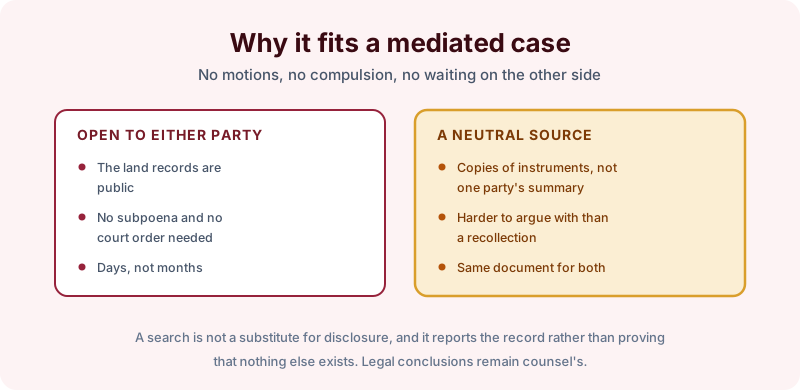
The land records are public. Either spouse, or a mediator with both parties’ agreement, can order a search without a court order, a discovery request, or the other side’s cooperation, and the result arrives in days rather than months.
The neutrality matters as much as the speed. What comes back is copies of recorded instruments from a county office, not a summary written by someone with an interest in the outcome. It is considerably harder to argue with a recorded deed than with a recollection, and in a mediated case the goal is usually to reduce the number of things left to argue about.
What goes on the table
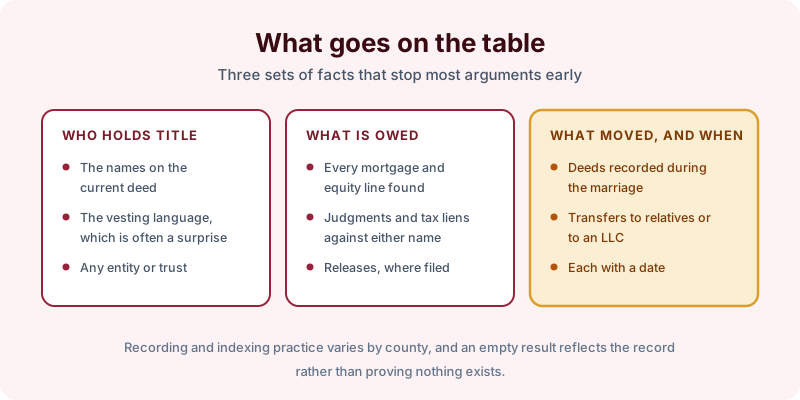
Three sets of facts, and each one routinely resolves something.
Who holds title, and how. The names on the current deed and the vesting language. This is the item most often wrong in people’s memory, particularly where a refinance moved title or a parent was added years ago, and it is the foundation of the one spouse on the deed confusion.
What is owed of record. Mortgages, equity lines, judgments, and tax liens found against the property or against either name, with recording dates and the copies to read.
What moved, and when. Deeds recorded during the marriage, including transfers to relatives or into an entity, each with a date. Nobody has to characterize those transfers in mediation for the dates to change the conversation.
Keeping the roles straight
A records search is not a substitute for disclosure, and it should not be presented as one. It reports what was recorded and indexed in the counties searched as of its date. Recording and indexing practice varies by county, an empty result reflects the record rather than proving nothing exists, and property in a county nobody searched is simply not covered.
It is also not a valuation. The report will show a recorded loan amount, not a payoff balance, and it says nothing about what the property is worth today. Appraisers do that.
And the legal conclusions stay with counsel. Whether an asset is marital or separate, whether a transfer can be unwound, and what an equitable division looks like are not records questions, and an abstractor who offers an opinion on them is out of their lane. Mediators find the distinction useful precisely because it keeps the document from becoming a position paper.
When to order it
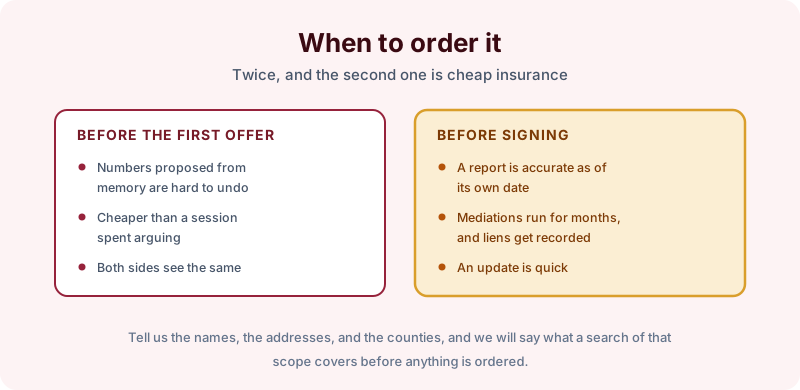
Early, and then again at the end. Ordering before the first proposal means the opening numbers are built on the record rather than on memory, and numbers proposed from memory are hard to walk back once someone has anchored to them. Mediations then run for months, so a short update before signing catches anything recorded in the meantime, which is the same reason a search close to closing matters in a sale of the marital home.
Where property sits in more than one county or state, each county has to be searched separately, so the county list is worth settling at the outset.
The takeaway
Buy the facts before you negotiate over them. A search is fast, available to either side without a fight, and produces the same document for both people in the room. Start the order online, or send us the names and addresses and we will tell you what a search of that scope would and would not cover before anything is ordered.