

· AFX Research
Using a Title Search in Divorce Discovery: What It Proves
How a records search fits alongside disclosures and interrogatories, what a recorded instrument establishes, what it cannot establish, and why the timing matters.
Table of Contents
Property discovery in a divorce usually starts with a form. Each side lists what they own, the lists get compared, and the disagreements become the case. A records search does something a form cannot: it produces dated documents that neither party wrote for this proceeding. That is a narrow contribution, and it is more useful when you understand its edges. If you are at the inventory stage, finding undisclosed real estate is the companion piece to this one.
Two different kinds of statement
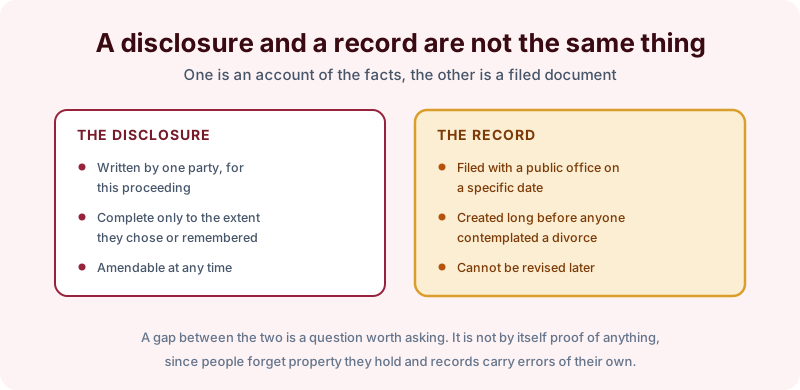
A disclosure is an account. It is written by one party, for this case, and it is complete to the extent that person chose to be complete and managed to remember everything. It can be amended.
A recorded instrument is different in kind. Somebody filed it with a county office on a specific date, usually years before anyone contemplated a divorce, and nothing that happens in the case changes what it says. That is why a deed carries weight a spreadsheet does not.
What a gap between the two means is a separate question. People genuinely forget an inherited interest in a family parcel, records carry misspellings and errors, and a name match is not always the same person. A discrepancy is a reason to ask, not a conclusion.
The practical value is narrower and more useful than it sounds. Most property fights in a divorce are not about whether a parcel exists. They are about when it was acquired, what was paid, whose money paid it, and what has been borrowed against it since, and every one of those has a recorded date attached to it somewhere.
What the report gives counsel
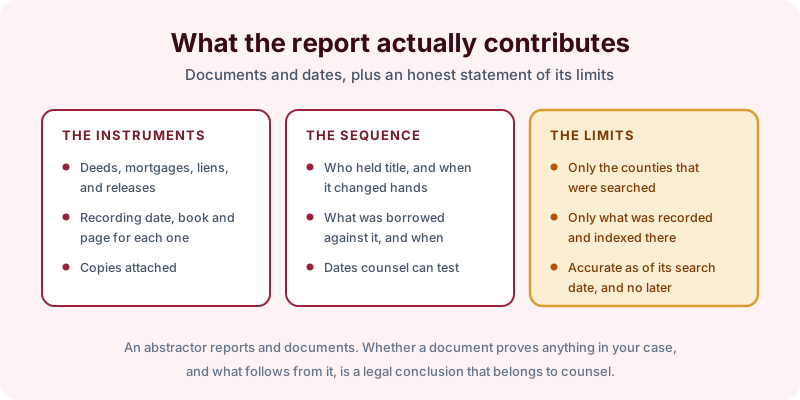
Three things, concretely. The instruments, with copies attached and a recording date, book, and page for each, which is what lets counsel reference a document precisely rather than describe it. The sequence, meaning who held title when, what was borrowed against the property and on what date, and whether anything was released. And the scope statement, which says which counties and which names were searched, and over what period.
That last item is the one people skip and the one that matters in a contested matter. A report that says only “nothing found” cannot be relied on, because nobody can tell what was looked at. A report that names the county, the index, and the years searched can be.
The limits belong in the same breath. A search covers what was recorded and indexed in the counties searched, as of the search date. It is not a complete inventory of what a person owns, and an empty result does not prove that nothing exists. Recording and indexing practice varies from county to county. And whether a document proves what one side says it proves is a legal conclusion for counsel, not something an abstractor asserts.
Timing changes what the search is worth
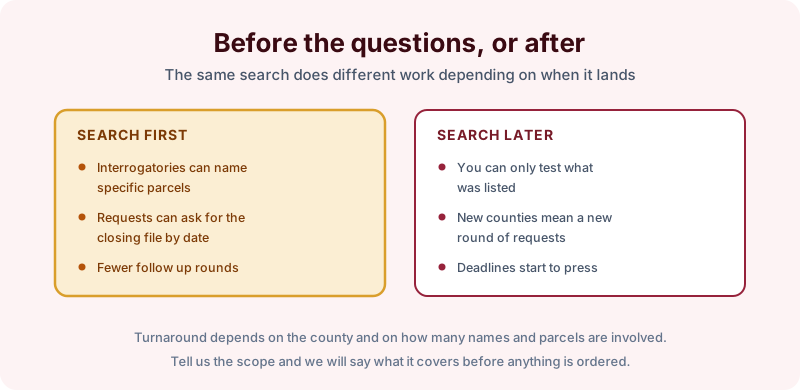
Run the search before the written questions go out and the questions get specific: name the parcel, cite the recording date, ask for the closing file for that transaction. Specific questions are harder to answer vaguely, and they usually save a round.
Run it after a disclosure is filed and the search can only test what was listed. That is still worth doing, and it is where a deed recorded during the separation tends to surface, but a new county discovered late means new requests against a deadline that is already close.
Either way, send more names than feel necessary: both spouses with middle names and former names, and any entity or trust that might hold title. Names cost almost nothing to add at the start and a great deal to add later, once the county has been searched and closed out.
One more timing note. A report is accurate as of its search date, so on a matter that runs a year or more, an update before a hearing or a settlement conference is the only thing that covers the months since.
The takeaway
A title search is not a lie detector and it is not an asset inventory. It is a way to put dated, third-party documents in front of counsel, along with a clear statement of what was and was not examined, early enough to shape the questions rather than react to the answers. Start the order online, or send us the names and addresses and we will tell you what a search of that scope would and would not cover before anything is ordered.