

· AFX Research
When the Marital Home Is Titled in a Parent or In-Law's Name
The couple lived there and paid for everything, and somebody else holds the deed. What a search settles, what it cannot, and how to build the money trail behind it.
Table of Contents
It is more common than the textbooks suggest. A couple has lived in a house for twelve years, paid the mortgage, put on a roof and raised children there, and the deed is in one spouse’s mother’s name. Now the marriage is ending and nobody can find a document that says what the arrangement was. The records half of that question is narrow and useful, and it is worth separating from the legal half early. It is adjacent to property held in an LLC or trust, with the complication that the third party here is family.
Why a parent holds the deed
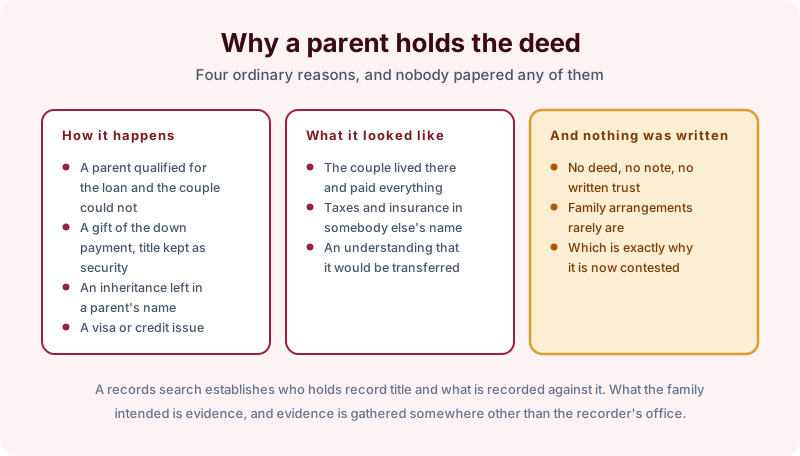
The reasons are ordinary. A parent qualified for the loan when the couple could not. A parent gifted or lent the down payment and kept title as informal security. A house came down through an estate and was never transferred on. Occasionally a credit problem or an immigration timing issue made it the simplest route.
What the arrangement looked like in practice is nearly always the same. The couple lived there, paid the mortgage, the taxes and the repairs, and everybody involved understood that the house was theirs in every sense except the recorded one.
And almost none of it was written down. No deed, no note, no written declaration of trust. Family arrangements rarely are, which is precisely why the question is contested now rather than obvious.
What the record does settle
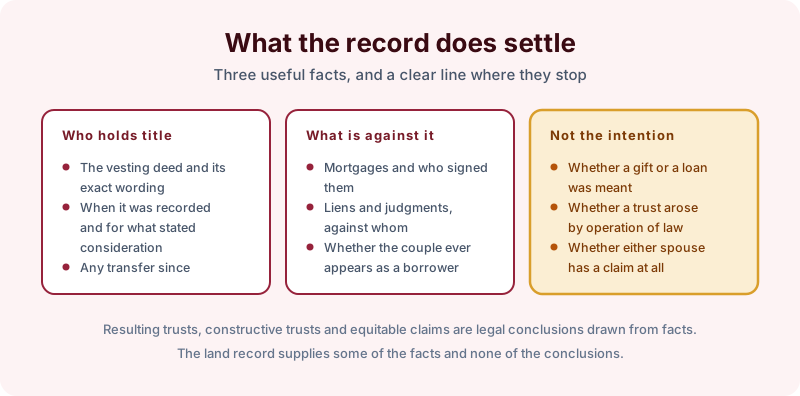
A search establishes who holds record title, the exact wording of the vesting deed, when it was recorded and for what stated consideration, and every transfer since. It establishes what is recorded against the property, who signed the mortgage, and whether either spouse ever appears as a borrower, which is frequently the most informative single fact available.
What it does not establish is intention. Whether the money from the parent was a gift or a loan, whether a resulting or constructive trust arose by operation of law, and whether either spouse has any claim at all are legal conclusions drawn from evidence. The land record supplies some of the evidence and none of the conclusions, and that line should be stated to a client rather than blurred.
Building the money trail
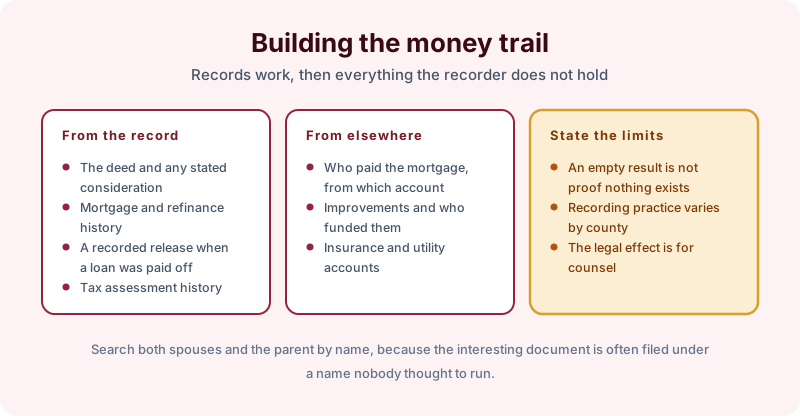
From the record, pull the deed and whatever consideration it recites, the full mortgage and refinance history, any recorded release showing a loan was paid off, and the tax assessment history. A refinance signed by the couple while the parent held title is a notable document, and so is any quitclaim recorded during the marriage moving the property between family members. So is a release recorded shortly after a date the couple says they paid the balance.
From elsewhere come the things that actually decide it. Who paid the mortgage and from which account, who funded the improvements, and whose names are on the insurance and the utilities. That is the same tracing exercise described in tracing a down payment in the property record, pointed at a third party’s deed.
Search all three names rather than two. Both spouses and the parent, because the interesting instrument is regularly filed under a name nobody thought to run. And state the limits in the report. An empty result means nothing was found in the indexes searched over the period searched, recording and indexing practice varies by county, and the legal effect of anything found belongs to counsel.
The takeaway
Start by getting the recorded position exactly right, because everything that follows is argued against it. Pull the deed and read the wording, run all three names, and assemble the payment history from outside the courthouse. Then hand the whole thing to counsel, since whether a spouse has an interest in a house titled in somebody else’s name is a legal question and a state specific one. Start the order online, or send us the names and addresses and we will tell you what a search of that scope would and would not cover before anything is ordered.