

· AFX Research
Tracing a Down Payment: What the Property Record Can Show
How recorded deeds and loan amounts help establish where the purchase money came from, what the county file can support, and where bank records have to take over.
Table of Contents
One spouse says the down payment came from an inheritance. The other remembers it differently. Ten or twenty years later there is no closing file in a drawer anywhere, and the argument turns on documents nobody kept. The county record will not settle it by itself, but it holds more than people expect, and what it holds has dates attached. This is the evidentiary side of the marital versus separate property question.
What the deeds actually say
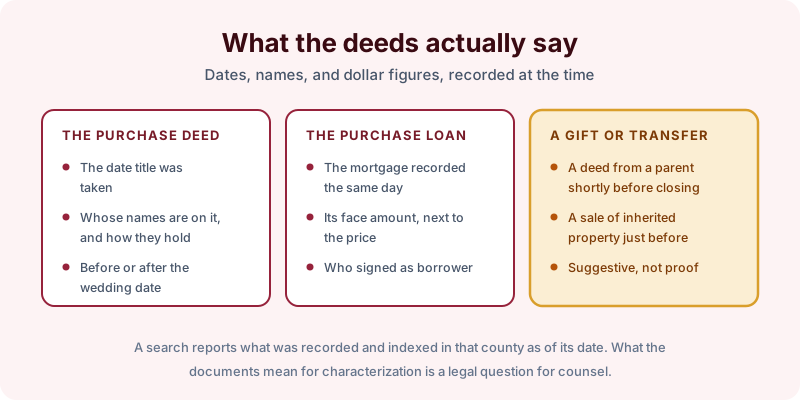
The purchase deed establishes the date title was taken, whose names went on it, and the vesting language used. That date alone answers the threshold question of whether the property was acquired before or during the marriage, and the names answer a second one that surprises people regularly: many spouses are wrong about whether they are on the deed at all.
The purchase money mortgage recorded the same day is the other half. It names the borrowers and states a face amount, and it is often the only contemporaneous document about the financing that still exists anywhere.
Then there are the neighboring instruments. A deed from a parent recorded a few weeks before closing, or a sale of inherited property in another county shortly before, is suggestive rather than conclusive, but it is the kind of fact that reframes a conversation.
The loan history is the arithmetic
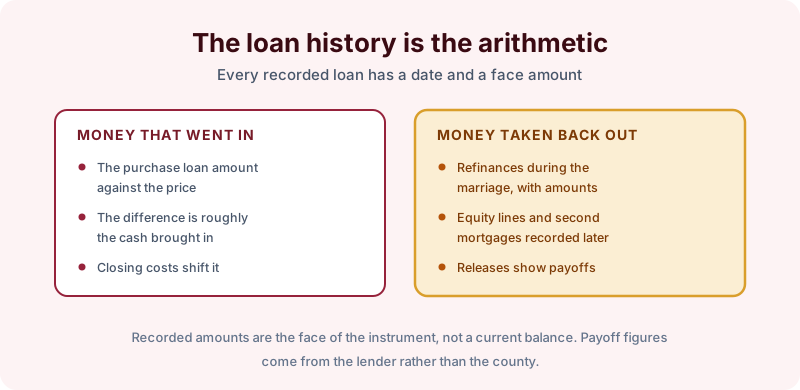
Compare the recorded loan amount against the purchase price and you have an approximate figure for the cash brought to closing. It is approximate because closing costs, credits, and prepaid items move the number, but it puts a bound on the claim, and a bound is often all a negotiation needs.
The record then keeps going. Refinances during the marriage, second mortgages, and equity lines each recorded a face amount on a date, which tells you when money was taken back out of the property. Releases show when loans were paid off. A tracing argument that ignores a cash-out refinance in the middle of the marriage tends not to survive contact with the record.
Two cautions. Recorded amounts are the face of the instrument rather than a current balance, and payoff figures come from the lender rather than the county. And a recorded amount says nothing about who made the payments afterward.
Where the record stops
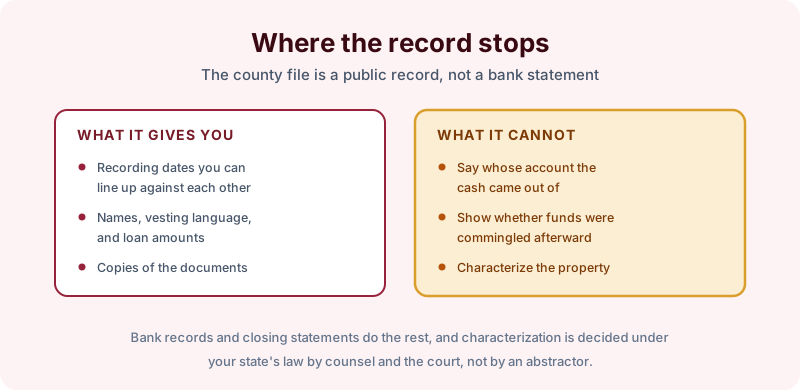
The county file is a public record of instruments, not a bank statement. It cannot tell you which account the cash came out of, whether a gift was deposited into a joint account first, or whether separate funds were commingled beyond recognition afterward. Those are questions for bank records, closing statements, and the lawyers reading them.
It also does not characterize anything. Whether a contribution stays separate, gets reimbursed, or is treated as a gift to the marriage is decided under your state’s law by counsel and the court, and rules differ sharply between community property and equitable distribution states. A search reports what was recorded and indexed in that county as of its date. Recording and indexing practice varies by county, and an empty result reflects the record rather than proving nothing exists.
What to ask for
Ask for the full chain on the property rather than a current-owner snapshot, because the instruments you need are the old ones. Send the address, the county, both names including any prior names, and the approximate purchase year. Where an inheritance or a family gift is part of the story, the other county where that property sat is worth searching too, since the sale that funded the down payment was recorded there.
Copies matter more than a summary here. A report listing “mortgage, 2004” is far less useful than the recorded instrument showing the amount, the borrowers, and the date, which is what an argument about contribution actually runs on.
The takeaway
The record will not prove where the money came from, and it will establish the dates, names, and amounts that any tracing argument has to be consistent with. Get those first, then decide what else is worth chasing. Start the order online, or send us the names and addresses and we will tell you what a search of that scope would and would not cover before anything is ordered.