

· AFX Research
Military Divorces: Property in Three States and Two Names
Why a service career scatters real estate across county indexes, which recorded quirks show up in these files, and how to build the county list from an assignment history.
Table of Contents
A twenty year service career can produce four addresses, three states, and two rental properties nobody thinks about until a settlement is being drafted. Nothing here is hidden. The houses were bought openly, financed conventionally, and rented out at the next set of orders. The difficulty is purely structural: real estate is indexed where it sits, so a career of moves scatters the record across counties that have no connection to each other or to where the case is filed.
The paper trail follows the orders
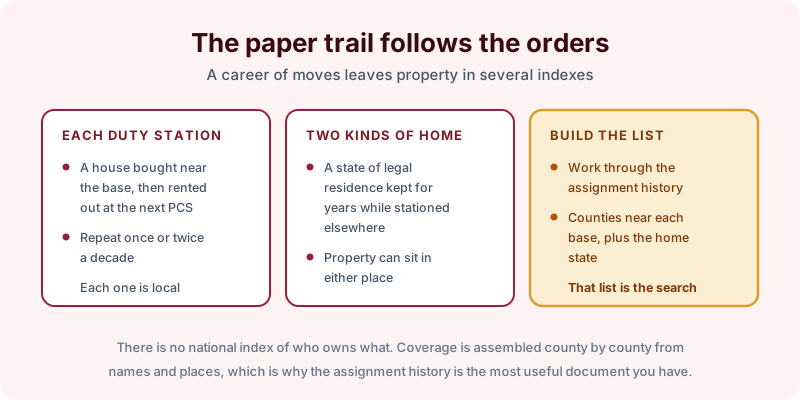
The pattern repeats. A house is bought near the base because buying beat renting, then a PCS arrives and selling into a soft market makes no sense, so the house becomes a rental and the family moves. Do that twice in a decade and the couple owns real estate in places neither of them has lived for years.
Layered on top is the distinction between where the family lives and the state of legal residence a service member may keep for years while stationed elsewhere. Property can sit in either place, and frequently sits in both.
The practical consequence is the same one that applies to any out of state property, only more so: there is no national index to query. Coverage is assembled county by county from names and places, which makes the assignment history the most useful document in the file.
One more wrinkle belongs here, because it changes which law applies rather than only where to look. Real property questions are generally governed by the law of the state where the land sits, so a couple who bought in one state, rented it out from another, and are divorcing in a third can find a single settlement spanning two or three different sets of rules. That is counsel’s analysis rather than ours, and the records step it depends on is the same either way: establish what is owned, where, and since when.
Two things you will see

Recorded powers of attorney. Deployments mean deeds and mortgages get signed by an agent, and the power of attorney authorizing it is frequently recorded alongside. Those documents are worth pulling and reading, along with any recorded revocation, because they show who was authorized to do what and when.
Entitlement questions that are not records questions. Whether a loan guarantee entitlement can be restored, how a survivor election works, and what a servicer will allow on an assumption are answered by the agency and the lender. The county index shows the recorded mortgage against the parcel and nothing about the entitlement behind it. Ask the lender for the loan side and leave the benefit questions to counsel, who will also handle any protections that apply while a service member is deployed.
Scoping the search
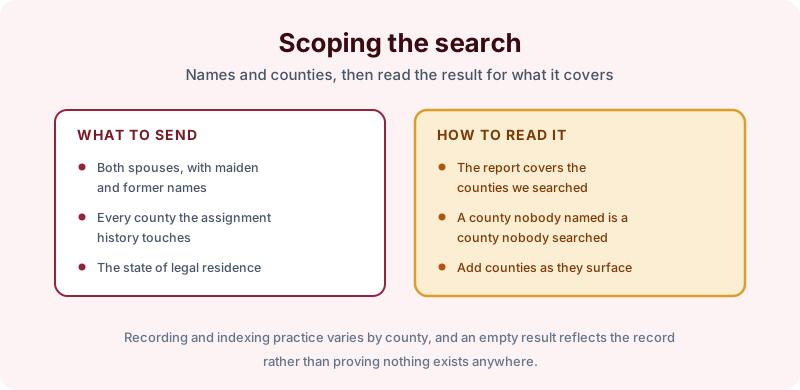
Send both spouses’ names with maiden and former names included, every county the assignment history touches, and the state of legal residence. If either spouse may hold property through an entity or a trust, the search runs against that name too. Our products page sets out the available scopes.
Then read the result precisely. It reports what was found of record in the counties searched, on the date searched. A county nobody named is a county nobody searched, so an empty result is a statement about coverage rather than about the world. Recording and indexing practice varies from one county to the next, a search is never a complete inventory of what someone owns, and counties can be added as new ones surface in discovery.
The takeaway
Build the county list from the assignment history rather than from the current address, pull any recorded power of attorney used during a deployment, and keep the loan entitlement questions with the lender where they belong. Start the order online, or send us the names and the counties and we will tell you what a search of that scope would and would not cover before anything is ordered.