

· AFX Research
A Marital Home Bought During a Prior Marriage, What to Check
A former spouse can still be on the deed twenty years later. What the earlier divorce should have recorded, what it often did not, and how to find out.
Table of Contents
A couple divorcing after fourteen years own a house one of them bought in 1998, during a marriage that ended in 2004. Everybody treats it as straightforward. The chain, when somebody finally reads it, shows the property still vested in the current owner and a former spouse nobody has spoken to since the Bush administration, because the quitclaim deed that was supposed to follow that first decree was never signed. Two divorces now sit in one chain, and the older one is the problem.
What a prior marriage leaves
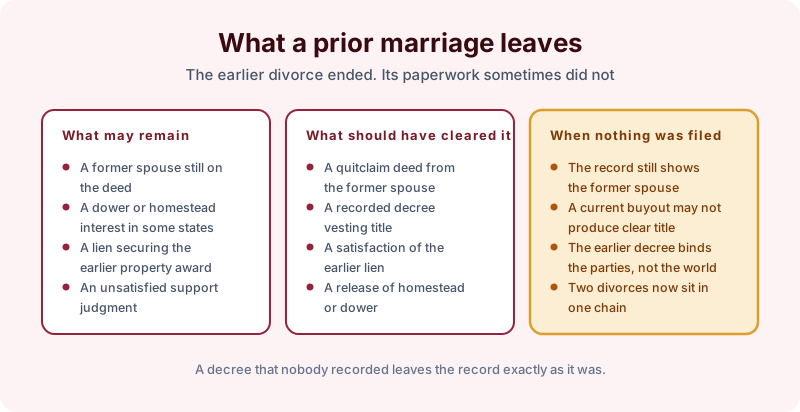
Several things can survive an earlier divorce. A former spouse still named on the deed. A dower or homestead interest, in the states that retain one. A lien securing the property award from that first case. An unsatisfied support judgment.
Each of those has a document that should have cleared it — a quitclaim from the former spouse, a recorded decree vesting title, a satisfaction of the earlier lien, a release of homestead. When that document was executed and recorded, the chain reads cleanly and there is nothing to discuss.
When it was never filed, the record simply still shows the former spouse. The earlier decree binds the parties to that case and tells the rest of the world nothing, which is the distinction set out in the divorce decree versus the deed. A buyout agreed in the current case may not produce clear title, and the discovery usually happens at a closing table.
Reading two divorces in a chain
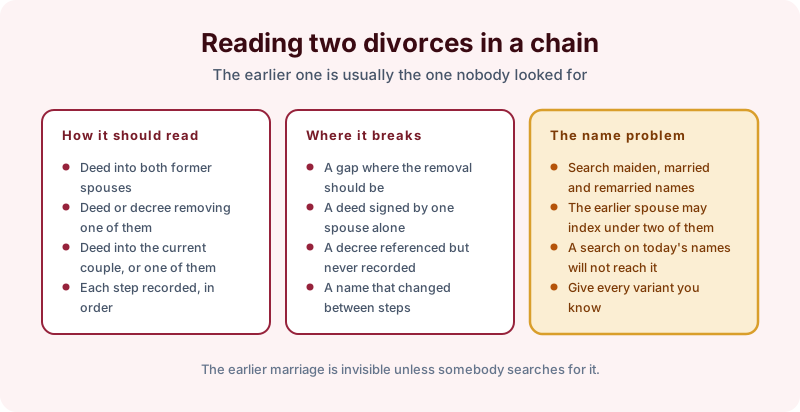
A clean chain here reads in four steps. Deed into both former spouses. A deed or recorded decree removing one of them. A deed into the current couple or into one of them. Each recorded, in order.
It breaks in predictable places. A gap where the removal should sit. A deed signed by one spouse alone at a point when both were on title. A decree referenced in a later instrument but never recorded itself. And a name that changed between steps, which is where most of these searches actually fail.
The name problem is the whole difficulty. The former spouse may be indexed under a maiden name, a first married name and a later one, and a search run on the names in front of you today will not reach any of them. Give the abstractor every variant anybody can remember, which is the same discipline described in name changes after divorce and the property record.
Why the term matters more than usual
The instinct on a divorce search is to cover the marriage. Here that is exactly wrong, because the defect predates the marriage entirely. A search beginning at the current couple’s acquisition date starts after the problem and will report a clean result with complete accuracy.
The term has to reach back past the acquisition into the prior ownership, far enough to see the earlier divorce and whatever was or was not recorded after it. That usually means a full chain search rather than a current owner search, and it is the single most useful decision in the file.
Scoping the search
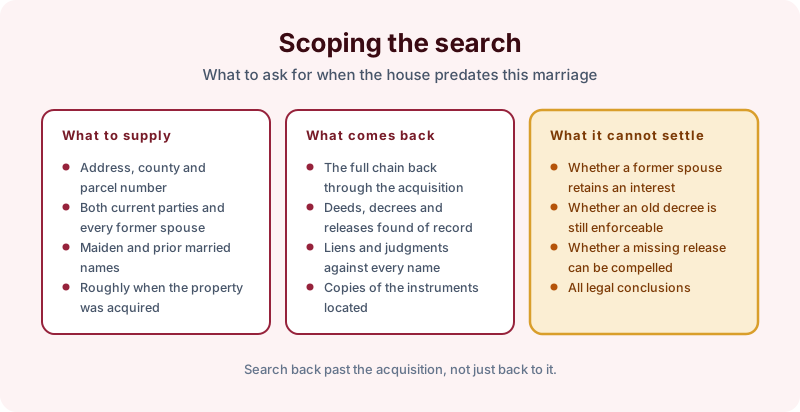
Supply the address, county and parcel number, both current parties and every former spouse, all maiden and prior married names, and roughly when the property was acquired. What comes back is the full chain back through the acquisition, the deeds, decrees and releases found of record, the liens and judgments against every name searched, and copies of the instruments.
What it cannot settle is whether a former spouse retains an interest, whether an old decree remains enforceable, or whether a missing release can be compelled. Those are legal conclusions for counsel. A records search reports what was recorded and indexed over the term searched, and an empty result does not prove nothing exists. See our products for the scopes available.
The takeaway
When the house predates this marriage, the risk usually predates it too, and it is invisible to a search that starts at the current owners. Search back past the acquisition and under every name either party has used. Start the order online, or send us the names and the address and we will tell you what a search of that scope would and would not cover before anything is ordered.