

· AFX Research
A Divorce Decree Is Not a Deed: What Actually Moves Title
Why the court file and the county index never talk to each other, what happens when years pass with no deed recorded, and how to confirm a transfer landed.
Table of Contents
A decree can order a spouse to convey the house and still leave the county index listing both names ten years later. That is not a failure of the court, and it is not unusual. It is what happens when a judgment that binds two people is mistaken for an instrument that changes a public record. The quitclaim deed that usually follows a settlement has its own limits, but at least it reaches the recorder. A decree sitting alone in a court file frequently does not.
Two records, kept separately
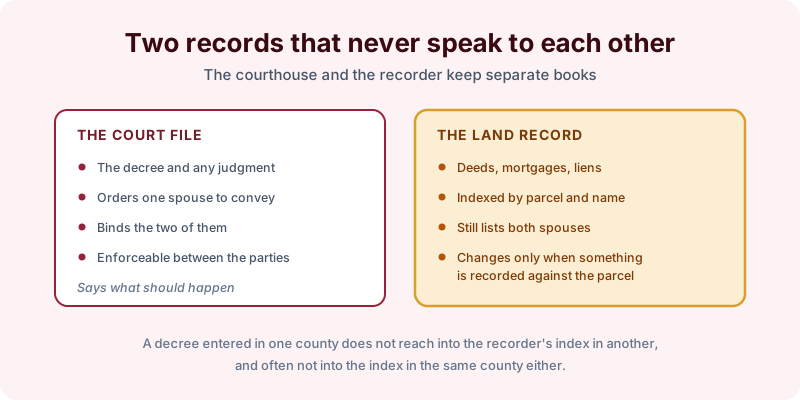
The court file holds the decree, the settlement agreement, and any judgment. Those bind the parties and are enforceable between them. If one spouse refuses to sign, the other has a remedy, and in many states a court can appoint someone to execute a deed or enter an order that itself operates on title.
The land record holds deeds, mortgages, and liens, indexed by parcel and by name. It changes when something is recorded against the parcel and at no other time. It has no awareness that a case was filed down the street, and it will keep reporting the vesting from the last recorded conveyance for as long as that remains the last one.
Some states do allow a certified copy of a decree, or a specific form of order, to be recorded and operate on title. Whether that is available, what form it takes, and whether it is the advisable route are questions of state law and local recording practice, and they belong to counsel licensed where the property sits. What is consistent everywhere is that something has to reach the recorder. A decree that stays in the court file changes nothing about what a title search will report.
The cost of the gap
Nothing goes wrong for a while, which is exactly why this persists.
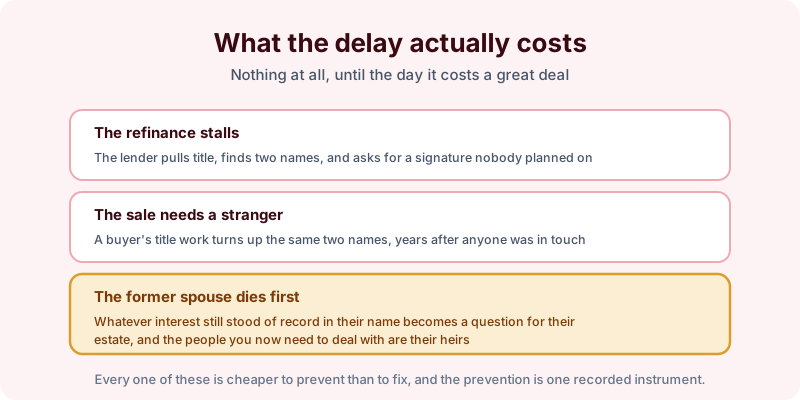
Then the person who kept the house tries to refinance, and the lender’s title work returns two names. Or they go to sell, and the buyer’s search does the same. Now a signature is needed from someone who has moved away, remarried, and has no particular reason to be helpful about it.
The version that is genuinely hard is when the former spouse dies first. Whatever interest still stood of record in their name becomes a question for their estate, and the people to deal with are heirs who may know nothing about a settlement reached before some of them were adults. Every one of these is far cheaper to prevent than to fix, and the prevention is a single recorded instrument.
What the search shows either way
A title search reports the vesting as it stands of record. If a deed was recorded after the decree, it appears with its recording date and the search shows title in one name. If no deed was recorded, the search shows what the last conveyance said, which is usually both names, and it will keep showing that indefinitely.
Neither result is a judgment about who is entitled to the property. A report states what was found of record in the county searched, on the date searched. Who owns what as a matter of law, and what a decree entitles someone to, are determinations for an attorney rather than an abstractor. What the report does supply is the fact pattern those determinations run on, with the instruments attached.
Confirming the transfer landed
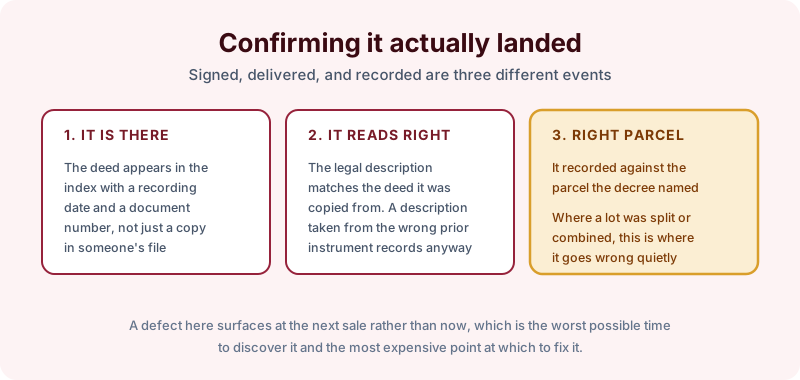
Where a deed was prepared, three things are worth confirming rather than assuming. That it is actually of record, with a recording date and document number, rather than signed and sitting in a file. That its legal description matches the deed it was copied from, since a description taken from the wrong prior instrument records without objection and surfaces at the next sale. And that it recorded against the parcel the decree named, which is where lot splits and combinations quietly cause trouble.
Running that check costs very little at the time and is the difference between a settlement that is finished and one that merely looks finished. Our products page sets out which scope fits, and our process page covers turnaround.
The takeaway
The decree tells the parties what should happen. The recorder only knows what was filed. Get an instrument recorded, then confirm it landed against the right parcel with the right description. Start the order online, or tell us the county and the parcel and we will confirm what the record currently shows before anything is ordered.