

· AFX Research
Vacant Land and Unimproved Lots in a Divorce Title Search
Unimproved parcels get forgotten because nobody lives on them and no statement arrives. What the record shows, and why access is the first question to ask.
Table of Contents
A house cannot be overlooked in a property division. A ten acre parcel two counties away, bought as an investment in 2011 or inherited from a grandparent, absolutely can. There is no monthly statement, no utility bill, no insurance renewal, and often nobody has been out to look at it in a decade. Then the settlement gets signed and the parcel surfaces later, which is a worse outcome than finding it during discovery. This is the specific case behind the general problem in our note on finding undisclosed real estate.
Why the lot goes missing
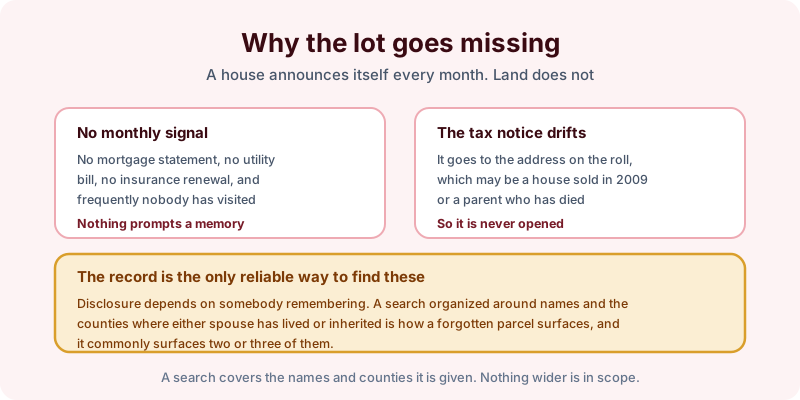
Two ordinary mechanics do it. Nothing arrives monthly to prompt a memory, and the one document that does arrive, the tax notice, goes to whatever address the assessor’s roll still carries. That may be a house sold in 2009 or a parent who has since died, so it is never opened by anyone with a reason to mention it.
The practical consequence is that disclosure alone is not a reliable inventory here. A search organized around both spouses’ names, including former and maiden names, across the counties where either has lived, owned, or inherited is how these surface. It is common to find two or three.
Two acres of what, exactly
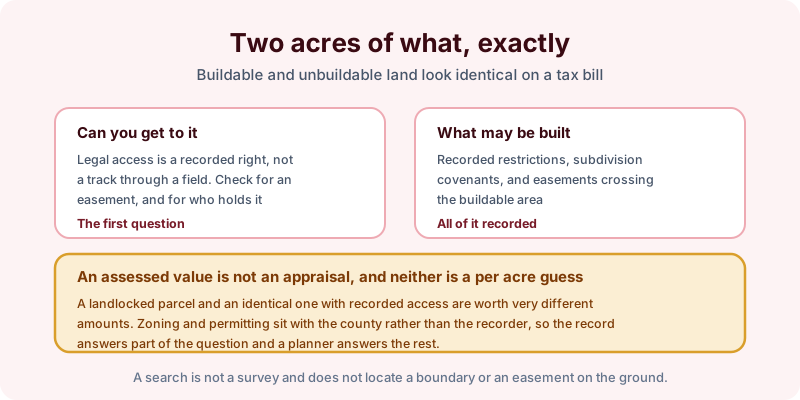
Once found, the parcel has to be valued, and this is where vacant land differs most from a house. Buildable and unbuildable land look identical on a tax bill.
Access is the first question. Legal access is a recorded right, not a track through a field, and a parcel with no easement to a public road is worth a fraction of an identical parcel with one. What may be built is the second. Recorded restrictions, subdivision covenants, and easements crossing the buildable area all constrain it, and all of them are in the record.
What is not in the record is zoning, permitting, and whether utilities can be brought in. Those sit with the county planning office, so the search answers part of this and a planner answers the rest. Working acreage raises its own set of questions, covered in our note on farm and ranch land.
The bill nobody is watching
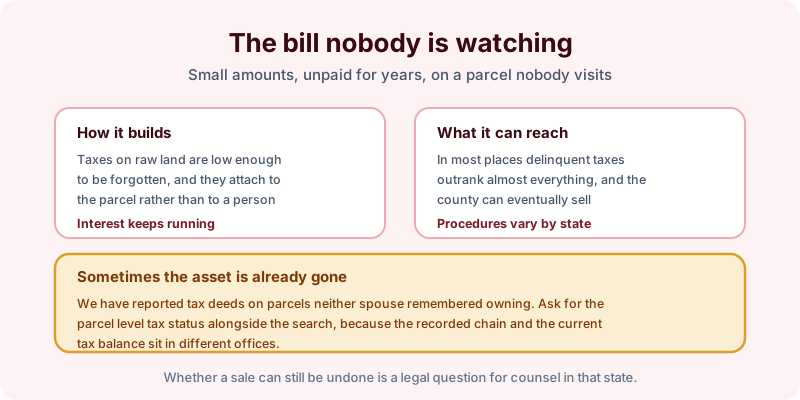
Taxes on raw land are small enough to be forgotten and they attach to the parcel rather than to a person, so they accumulate with interest while nobody notices. In most places delinquent property taxes outrank almost everything else, and the county can eventually sell the parcel, with procedures that vary considerably by state.
That produces an outcome worth naming: sometimes the asset is already gone. We have reported tax deeds on parcels neither spouse remembered owning. Ask for the parcel level tax status alongside the search, because the recorded chain and the current tax balance sit in different offices, a split our note on tax liens on marital property covers in more detail.
What the search will and will not settle
The search reports what was recorded and indexed for the parcels and names given, as of its date, with copies: the vesting deed, how title is held, recorded access easements and restrictions, mortgages, judgments, liens, and any tax deed. That is what a valuation and a settlement need.
It cannot value the parcel, confirm it is buildable, locate a boundary or an easement on the ground, or tell you the current tax balance. It also cannot find land in a county nobody named. Recording and indexing practice varies by county, so an empty result reflects the record rather than proving no parcel exists.
The takeaway
List every county either spouse has any connection to, send both names with former names, and ask specifically about vacant parcels rather than about property generally. Our process page explains what happens at intake. Start the order online, or send us the names and addresses and we will tell you what a search of that scope would and would not cover before anything is ordered.