

· AFX Research
Marital or Separate Property: What Title Records Actually Show
How the recorded chain of title supports a marital or separate property argument, which dates and instruments carry weight, and the one fact the county never holds.
Table of Contents
Whether the house is marital or separate property is one of the first questions in a property settlement, and it usually turns on facts that were recorded years before anyone contemplated a divorce. A title search cannot tell you which category a court will put the property in. What it can do is produce the dated instruments the argument gets built from, which is a narrower job than people expect and a more useful one. If you are still working out what real estate exists at all, start there and come back to this.
What the record answers, and what it does not
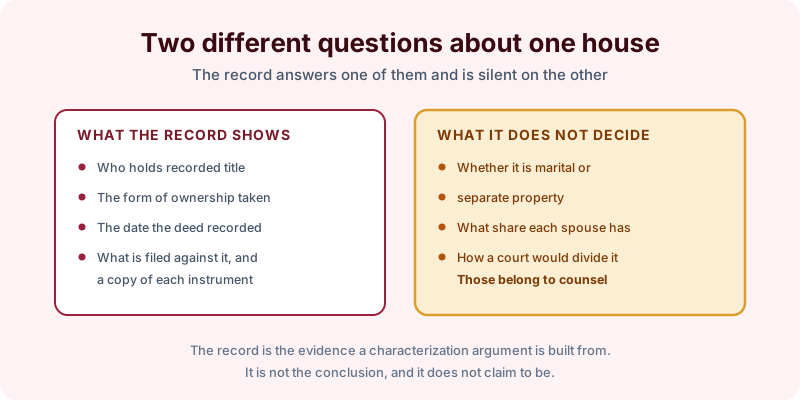
The land records are good at a specific set of facts: who holds recorded title, how they took it, the date the instrument was filed, and what has been recorded against the parcel since. They are silent on characterization. No county recorder anywhere stamps a deed “separate property.”
That silence is not a shortcoming. Characterization is a legal conclusion under the law of a particular state, and the states differ substantially, both between community property and equitable distribution systems and within each of them. The abstractor’s job ends at documenting what was found of record. Your attorney’s begins there.
The dates and the grantors do the work
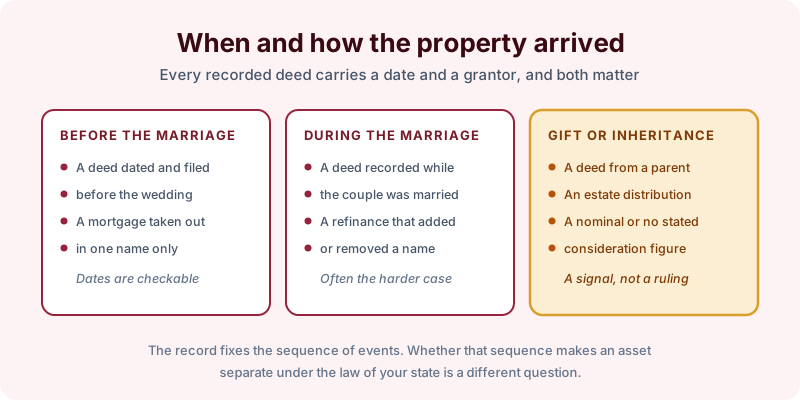
Two fields on a recorded deed carry most of the weight. The recording date places the acquisition before or during the marriage. The grantor says who it came from, and a deed from a parent or from an estate distribution looks materially different from a deed from an unrelated seller.
Stated consideration is worth reading too. A nominal figure, or the transfer tax declarations that some jurisdictions require, can indicate a gift rather than a purchase. None of this is conclusive. All of it is checkable, which is the point: these are documents with dates on them, not recollections.
Commingling leaves instruments behind
The harder cases are rarely about the original purchase. They are about what happened afterward, and most of what happened afterward was recorded.
A refinance during the marriage that added the other spouse to title is an instrument. So is an interspousal transfer deed signed to satisfy a lender, a deed moving the property into or out of a trust, and a deed changing the form of co-ownership. Each of these is a filed document with a date, and a full chain of title report lays them out in sequence with copies attached.
People frequently do not remember signing these. Refinance packages are thick, and a deed tucked into one at a title company table twelve years ago is easy to forget. It is still of record, and it still says what it says.
What the land records will never hold
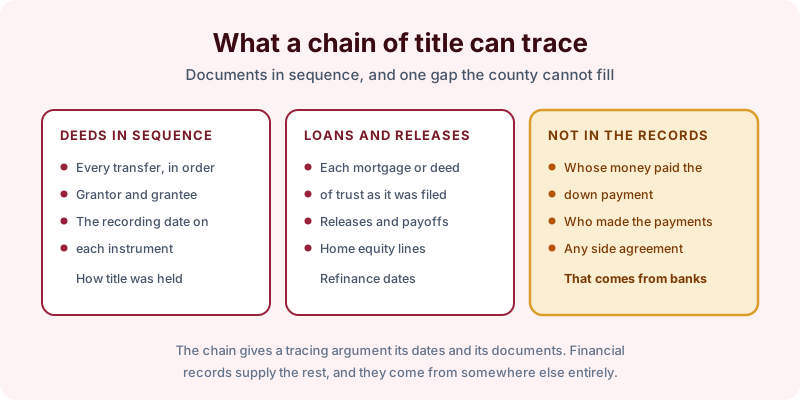
Here is the limit worth being blunt about. Tracing arguments usually depend on whose money paid the down payment and who made the payments, and the county records contain none of that. They hold instruments, not bank statements. A search can establish that a deed recorded in March 2011 and that a mortgage was released in 2019; it cannot say which account the funds came from.
Two other limits matter. A search reports what was recorded in the counties actually searched, so property in another state needs that county included. And an empty result is not proof that nothing exists, only that nothing was found of record in the places looked. Recording and indexing practice varies from county to county, which is why the search scope is a decision rather than a default. Our process page covers how we set it.
The takeaway
Order the search early enough that the documents inform the negotiation rather than arriving after it. Read the recording dates, the grantors, and every instrument signed during the marriage, then hand the whole set to counsel to characterize. Start the order online, or tell us the names and the counties and we will tell you what a search of that scope would and would not cover before anything is ordered.