

· AFX Research
When a Divorce Is Reopened or Modified, and the Property Record
A case that closed years ago can come back, and the land record may have moved on without it. What was filed, what was not, and what a search shows now.
Table of Contents
A decree is final and then, three years later, it is not. A motion goes in to enforce a provision nobody carried out, or to set aside a judgment because something was never disclosed, or to modify an arrangement that stopped working. The court can reopen a property question, and while the case was closed the land record kept running. Deeds were recorded or not recorded, creditors filed against one name or the other, and whatever is now in the county is what a stranger to the case would rely on. This is the sequel to finding property after the divorce is final.
Why a decree gets reopened
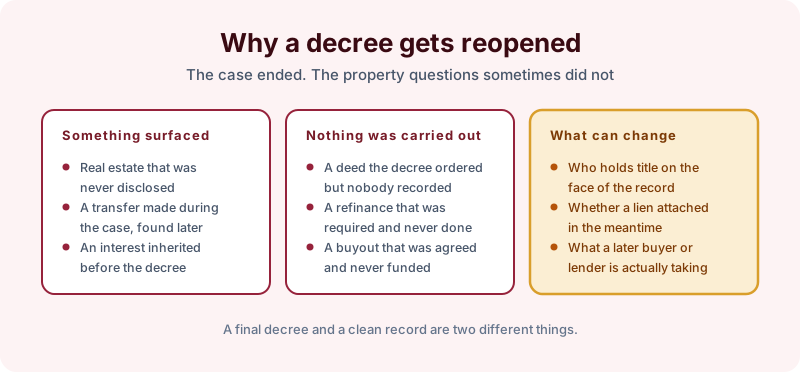
Broadly, two things bring a property question back. Something surfaced — real estate that was never disclosed, a transfer made quietly while the case was pending, an interest inherited before the decree that nobody counted. Or nothing was carried out — the deed the decree ordered was never signed, the refinance that was supposed to remove one spouse never happened, the buyout was agreed and never funded.
The second category is more common than the first and much less dramatic. It is also the one that shows up in the record as a straightforward mismatch, where the decree says one thing and the deed on file says another.
What it leaves in the record
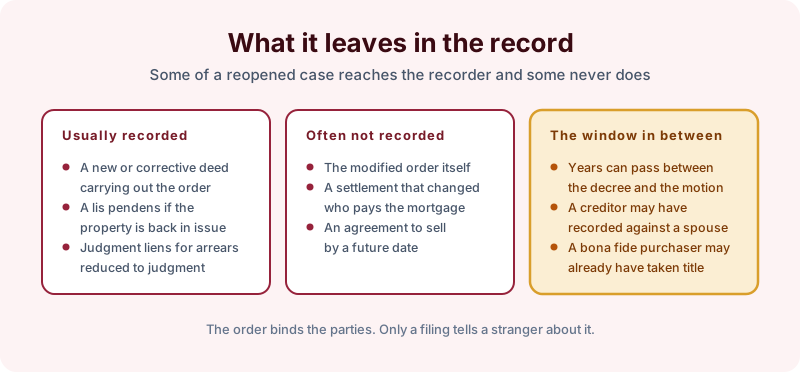
Some of a reopened case reaches the recorder. A new deed or a corrective deed carrying out the order. A lis pendens, if the property is genuinely back in issue. Judgment liens, where arrears were reduced to judgment — the mechanics of which are set out in judgment liens recorded after the decree.
A good deal of it never does. The modified order itself is usually not recorded. A settlement changing who pays the mortgage lives in the case file. An agreement to sell by a future date binds the parties and tells the county nothing.
That distinction matters because of the window in between. Years can pass between the original decree and the motion, and in those years a creditor may have recorded against one former spouse, or a buyer may have taken title from whoever the record said was the owner. A court order binds the people in front of it. Only a filing puts the rest of the world on notice.
Why the effective date is the whole question
In an ordinary divorce search, the date matters. In a reopened one, it is the point. You are not asking what the record showed at the time of the decree; you are asking what has happened since, and whether the interest the court is being asked to move is still there to be moved.
So the term searched should begin before the original decree and run to the present, and the search should cover every name either party has used. Recording and indexing practice varies by county, and an instrument filed under a former name may be perfectly recorded and still invisible to a search that only looks for the current one.
Scoping the search
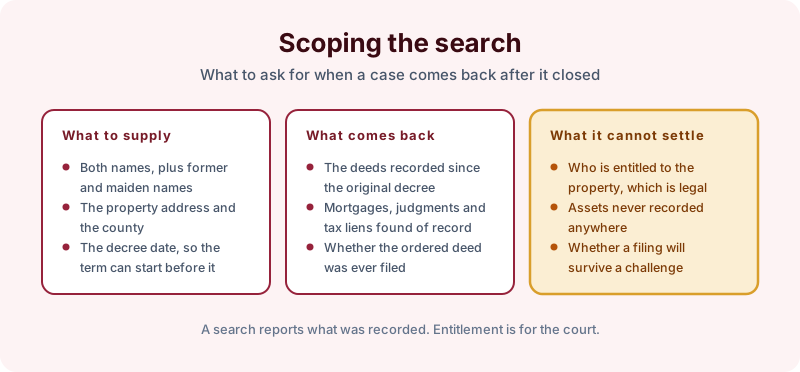
Supply both parties’ names including former and maiden names, the property address and county, and the decree date so the search term can start before it. What comes back is the deeds recorded since, the mortgages, judgments and tax liens found of record, and the plain answer to whether the ordered deed was ever filed.
What it cannot settle is who is entitled to the property. That is a legal conclusion for the court. A records search also cannot report an asset that was never recorded anywhere, and an empty result is not proof that nothing exists — it means nothing was found of record in the county searched over the term searched. Read our more information page for what that scope covers.
The takeaway
When a case reopens, the decree and the record have had years to drift apart, and the gap between them is where the risk sits. A search run over the full period, under every name, tells you what the world can see. Start the order online, or send us the names and the address and we will tell you what a search of that scope would and would not cover before anything is ordered.