

· AFX Research
Partition and a Court Ordered Sale of the Former Marital Home
When partition becomes the route out of a jointly owned home, who has to be named in the action, and how the sale proceeds are actually distributed.
Table of Contents
Sometimes the divorce ends and the house does not. One party will not sell and cannot afford to buy the other out, or the decree awarded the home but no deed was ever signed, so the record still shows two owners with no agreement between them. Partition is the remedy for that situation, an action asking a court to divide co-owned property or, far more commonly, to sell it and divide the money.
It is worth understanding what partition actually requires, because the action is built almost entirely out of facts that live in the land records.
How people end up here
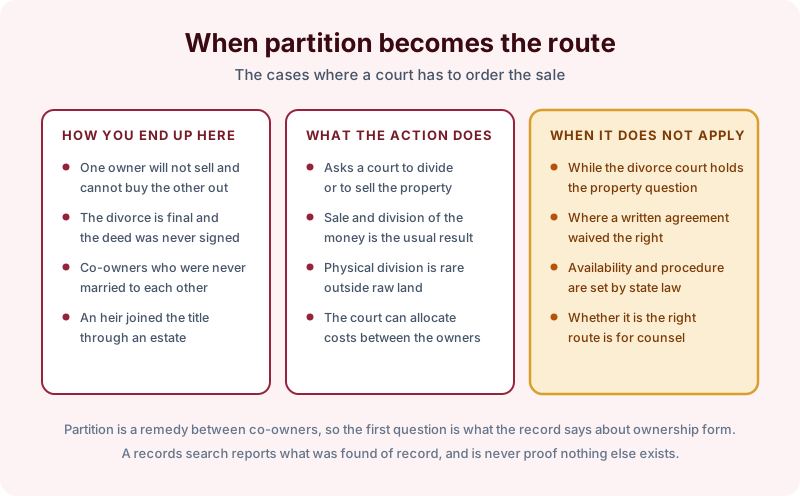
The classic route is a decree that resolved everything except the transfer. The house was awarded, no deed followed, and years later the record still carries both names — the situation described in divorce decree versus deed. Others arrive through an estate, where an heir joined the title and now holds a share nobody planned for, or through a relationship that was never a marriage at all, which is its own problem in unmarried couples splitting property.
What partition is not is a substitute for the divorce court. While the property question is still in front of that court, partition generally is not the route. Availability, procedure, and whether a written agreement waived the right are all matters of state law, and whether this is the right action is a question for counsel rather than a records question.
The filing stands on the record
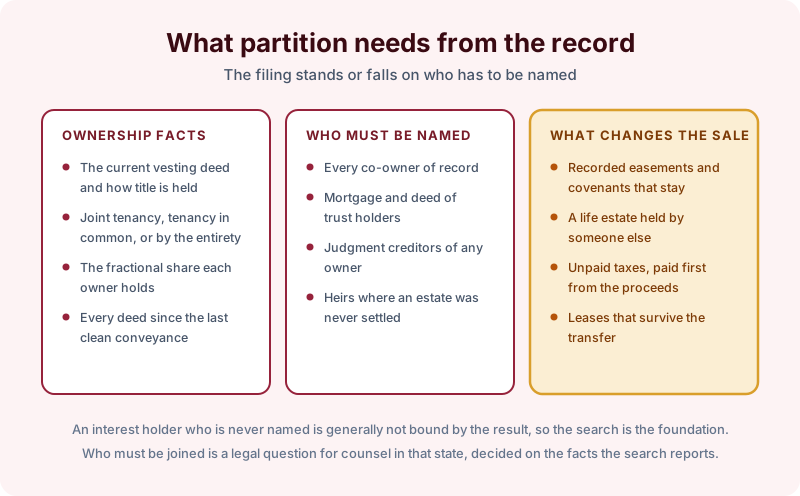
Two things have to be established before anything is filed. First, how title is actually held — joint tenancy, tenancy in common, or tenancy by the entirety each behave differently, and the fractional share each owner holds comes out of the deeds rather than out of anyone’s recollection. That distinction is the subject of joint tenancy versus tenancy in common after a divorce.
Second, everyone with an interest has to be named. Co-owners of record, mortgage and deed of trust holders, judgment creditors of any owner, and heirs where an estate was never properly settled. An interest holder who is never joined is generally not bound by the outcome, which means a defect in the search becomes a defect in the judgment. Exactly who must be joined is a legal question, but it is answered from the facts a search reports.
Recorded items also shape what the sale can actually deliver. Easements and covenants survive it. A life estate held by someone else changes what is being sold. Unpaid taxes come off the top. Leases may continue past the transfer.
Where the money goes
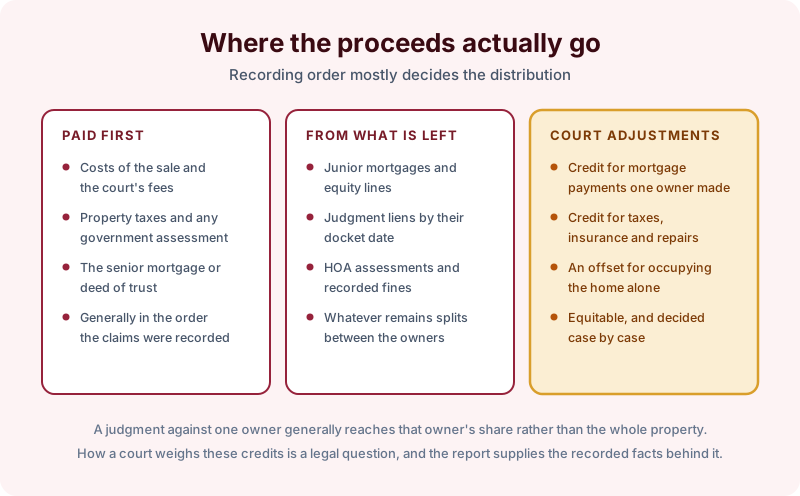
Distribution follows recording order for the most part. Sale costs and court fees, then property taxes and government assessments, then the senior mortgage. Junior mortgages, judgment liens by docket date, and HOA claims come out of what is left. Whatever survives that splits between the owners according to their shares.
The interesting part is the adjustments. A court can credit one owner for mortgage payments, taxes, insurance, and necessary repairs they carried alone, and can offset that against the value of having occupied the house by themselves. Those credits are equitable and decided case by case, and they frequently matter more to the final numbers than the headline split does.
One thing worth keeping straight is that a judgment against one owner generally reaches that owner’s share rather than the whole property. Which share it reaches is worth establishing early, and it is the same question raised by judgment liens recorded after the decree.
The takeaway
Partition turns a stalemate into a sale, and the action is only as good as the record behind it. Establish how title is held and what each share is, find every party who has to be named, and price the liens in recording order before anyone argues about the split. A search reports what was found of record, which is not the same as everything that exists. Start the order online, or send us the names and addresses and we will tell you what a search of that scope would and would not cover before anything is ordered.