

· AFX Research
Recording Notice of a Divorce Against the Marital Property
A recorded notice warns anyone searching the parcel and does not freeze it. What it accomplishes, what it cannot stop, and why the record has to be checked again later.
Table of Contents
Somewhere early in a contested divorce, someone asks whether the house can be locked down so the other spouse cannot sell it or borrow against it. The instinct is sound and the mechanism is narrower than people expect. Recording a notice puts the claim into the land record where anyone searching will see it, and that is genuinely useful, but it is a warning rather than a lock. Understanding the difference is what keeps the strategy realistic, and it sits alongside deeds recorded during a separation.
What a recorded notice actually does
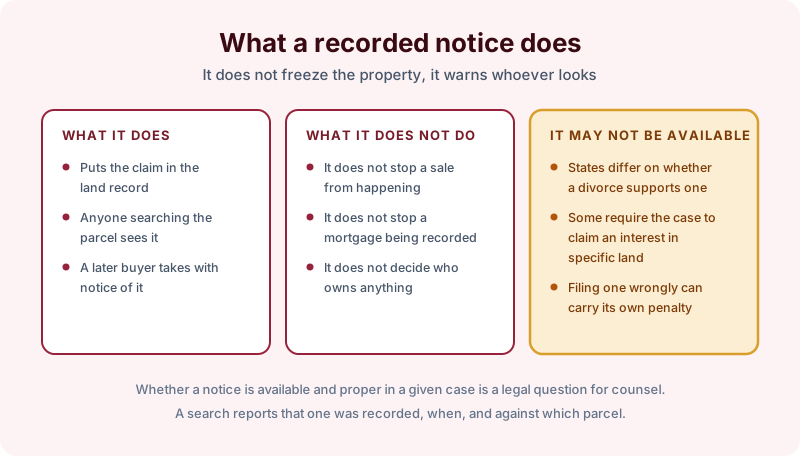
It puts the claim in the land record. Anyone searching the parcel sees it, and a later buyer or lender takes with notice of whatever is being claimed. That changes how a title company behaves and it changes what a purchaser can argue afterwards.
What it does not do is stop anything from happening. A sale can still close, a mortgage can still be recorded, and the notice decides nothing about who owns what.
And it may not be available at all. States differ on whether a divorce supports this kind of filing, and several require the case to assert a claim to specific real property rather than a general division of assets. Filing one where it is not proper can carry its own consequences, which makes this squarely a question for counsel rather than a form to be filed reflexively.
There is a practical middle ground worth knowing about. In many places a temporary or standing order restraining either party from transferring property does most of the protective work, and it operates on the spouses rather than on the land. It will not appear in a title search, so a purchaser searching the parcel would never see it, but as between the two people in the case it is often the more effective instrument.
The record keeps moving during the case
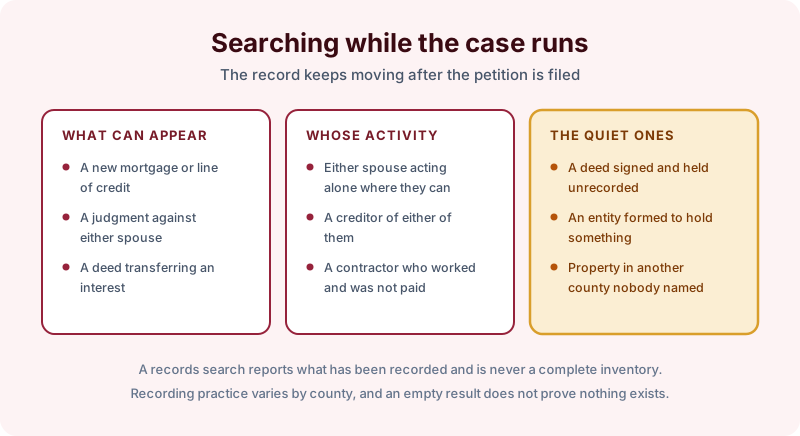
A contested case can run a year or more, and nothing about the county record pauses for it. A new mortgage or line of credit, a judgment against either spouse, or a deed transferring an interest can all appear while the case is pending.
The activity comes from more directions than people expect. Either spouse acting alone where state law and the vesting allow it, a creditor of either of them, or a contractor who did work and was not paid.
Then there are the quiet ones. A deed signed and held unrecorded, an entity formed to hold something, or property in a county nobody has named. A records search reports what has been recorded and is never a complete inventory of a person’s assets, which is the same limit described in finding undisclosed real estate in a divorce.
Search again before anything is signed
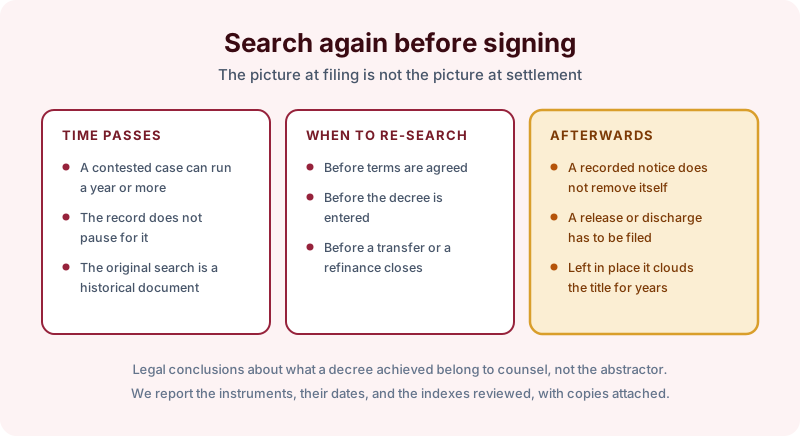
The search run when the petition was filed describes a property as it stood then. By settlement it is a historical document, and the gap between the two is exactly where an unwelcome finding lives.
Three moments are worth a fresh look. Before terms are agreed, before the decree is entered, and before any transfer or refinance closes. Each of those is a point where somebody is about to rely on the record being what they last saw.
One more thing, easily forgotten. A recorded notice does not remove itself when the case ends. A release or discharge has to be filed, and one left in place clouds the title for years, surfacing when the property is next sold. Our process starts by establishing what the record currently says, which is the only sound starting point.
The takeaway
A recorded notice warns rather than freezes, it may not be available in your state, and it needs releasing afterwards. Assume the record will move during the case, search it again before terms are signed, and treat legal conclusions about what any filing achieves as counsel’s rather than the abstractor’s. Start the order online, or send us the address and the names and we will tell you what a search of that scope would and would not cover before anything is ordered.