

· AFX Research
What a Legal Separation or an Annulment Does to the Property Record
One leaves the marriage intact, the other treats it as never valid, and both change the property questions. What gets recorded and which date turns out to matter.
Not every marriage that ends in practice ends in a divorce. Some couples separate legally and stay that way for years, and a small number obtain annulments. Both produce property questions, and both behave differently from a divorce in the land record, which matters because most of the standard advice assumes a decree that divides everything. The characterization problem underneath is the one in marital versus separate property.
Three different endings
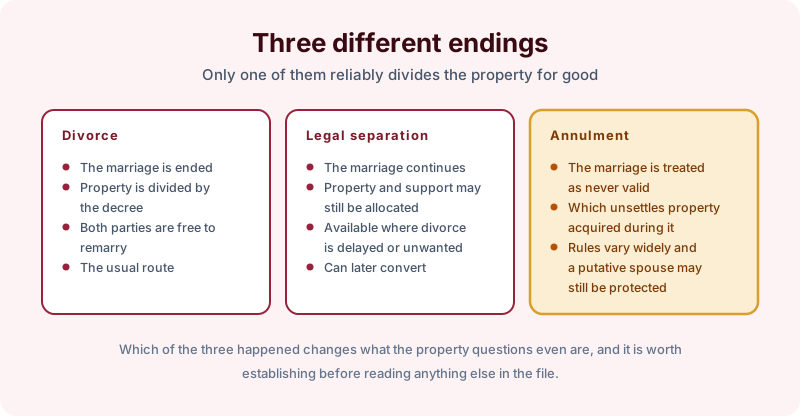
A divorce ends the marriage and the decree divides the property. Both parties are free to remarry. This is the route most of the field is built around.
A legal separation leaves the marriage in place. Property and support can still be allocated, and the arrangement is used where a divorce is delayed, unwanted for religious or insurance reasons, or simply not yet agreed. Many convert to a divorce later, and many do not.
An annulment treats the marriage as never having been valid, which unsettles everything acquired during it. The rules vary widely and most states protect a putative spouse who married in good faith, but the starting point is genuinely different from a divorce and the property analysis follows from it.
Which of the three happened changes what the property questions even are, so it is worth establishing before reading anything else in a file.
What a separation changes
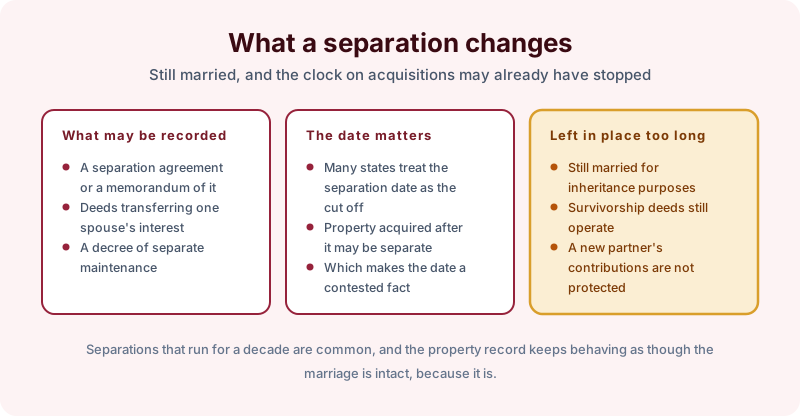
Some of it reaches the record. A separation agreement or a memorandum of one is recordable in many places. Deeds transferring one spouse’s interest to the other are recorded like any deed. A decree of separate maintenance may be filed.
The date becomes the significant fact. Many states treat the date of separation as the cut off for acquiring marital property, so what one spouse buys afterward may be separate. That makes the separation date a contested question in a way a divorce date never is, since the divorce date is on a decree and the separation date is a matter of evidence.
The real risk is a separation left in place for a decade. The parties are still married for inheritance purposes. A survivorship deed still operates, so one death hands the whole property to a spouse nobody has spoken to in years. And a new partner contributing to a house has no protection at all.
An annulment raises the opposite problem. If the marriage was never valid, the presumption that property acquired during it was marital has nothing to rest on, and each acquisition has to be characterized on its own facts. Most states soften that through putative spouse doctrines, and the softening varies enough that the answer genuinely depends on where the land is, as it does in community property versus equitable distribution.
What to search
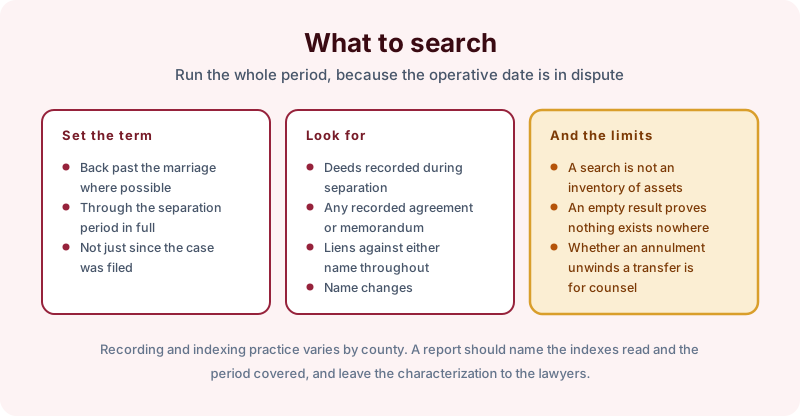
Set the term to cover the whole period rather than only since a case was filed. Back past the marriage where the records allow it, and through the separation years in full, because the operative date is in dispute and instruments recorded during that stretch are the evidence.
Look for deeds recorded during the separation, any recorded agreement or memorandum, liens indexed against either name throughout, and name changes, which are common after a long separation and break a name search quietly.
Then state the limits plainly. A search is not an inventory of anybody’s assets, an empty result means nothing was found in the indexes searched over the period searched, and whether an annulment unwinds a transfer made during the marriage is a legal conclusion for counsel. Recording and indexing practice varies by county, so a report should name what it read.
The takeaway
Find out first which of the three you are dealing with, because a separation leaves a live marriage behind it and an annulment reopens the characterization of everything acquired. Run the term across the whole period rather than from the filing date, watch for deeds and agreements recorded quietly during the separation, and leave the legal effect to counsel. Start the order online, or send us the names and addresses and we will tell you what a search of that scope would and would not cover before anything is ordered.