

· AFX Research
Homestead and Spousal Rights: Interests That Are Not on the Deed
Why a single name on a deed does not settle what a spouse may hold, which recorded signatures hint at it, and how to scope a search when one spouse is missing from title.
Table of Contents
The most common surprise in a divorce property file is not a hidden parcel. It is a house that turns out to be encumbered by a right nobody can see in the index. One spouse is on the deed, the other is not, and the assumption on both sides is that the deed settles it. Frequently it does not, because some rights attach to a marital home by statute rather than by conveyance. The marital versus separate question is counsel’s, and this is one of the places where the record and the rights diverge most.
One name on the deed, two interests
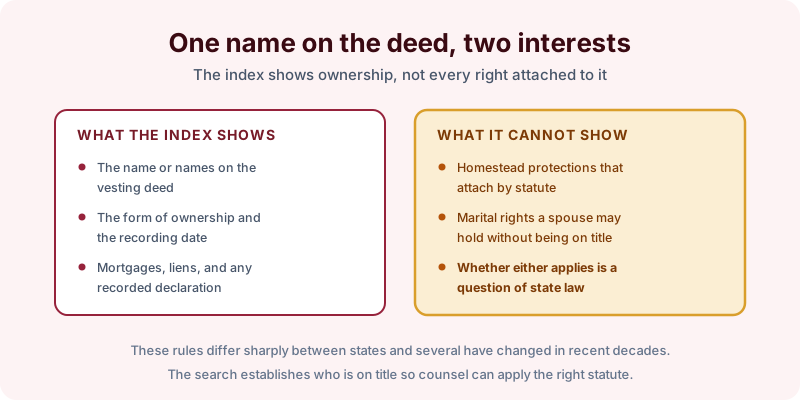
The record is precise about ownership. It shows the names on the vesting deed, the form of ownership taken, the recording date, the mortgages and liens filed against the parcel, and any recorded homestead declaration in the states that use them.
What it does not display is a right that arises by operation of law. Many states protect a homestead, and many give a spouse an interest in the marital residence, or at least a veto over encumbering it, whether or not that spouse ever appeared on a deed. The names differ, the mechanics differ, several states have changed their rules in recent decades, and a few older doctrines survive in a small number of jurisdictions while having been abolished elsewhere.
So the honest division is this. Whether a right exists here is a legal question for counsel applying the statute of the state where the property sits. What the search does is establish exactly who is on title, so that question can be asked correctly.
Look at who signed, not just who owns
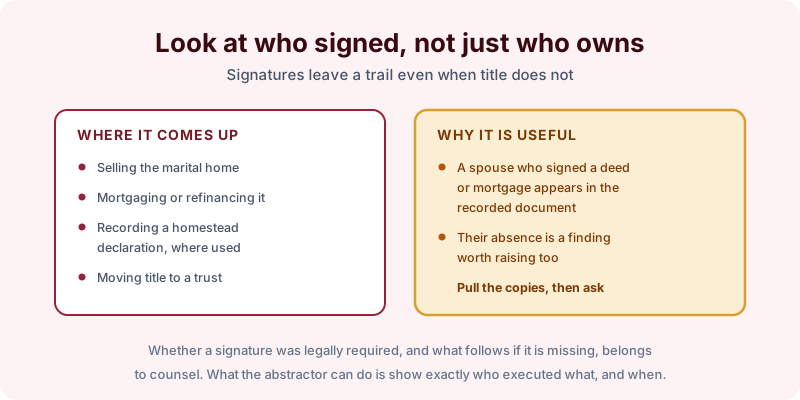
Here is the practical trick that makes these files tractable. Rights that never appear as ownership often appear as signatures.
In many states a spouse has to join in a sale or a mortgage of the marital home even when not on title. So the recorded documents themselves carry the evidence: a deed or mortgage signed by a spouse who holds no recorded interest, sometimes with language about releasing or waiving rights. Homestead declarations, where a state uses them, are recorded too, and a transfer into a trust often required the same signature.
Their absence is equally informative. A mortgage on a marital home signed by one spouse alone, in a state that ordinarily requires both, is worth raising with counsel early rather than discovering during a sale. Whether the signature was legally required, and what follows if it is missing, is a legal question. What we can do is show precisely who executed what, and when, with copies attached.
How to scope it
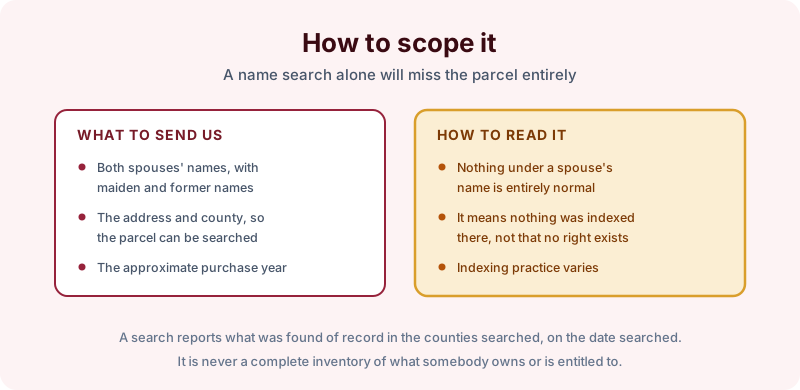
Send both spouses’ names, including maiden and former names, plus the address and county so the search can run against the parcel as well as the names. That last part matters more than it sounds: a spouse who is not on title will not appear in a name search for that property at all, so a name-only search returns nothing and looks like an answer.
An approximate purchase year helps set the term, since the operative deed and any spousal signature predate everything the couple has argued about since.
Then read the result carefully. It reports what was found of record in the counties searched, on the date searched. Nothing indexed under a spouse’s name is an entirely normal outcome and means only that nothing was indexed there. Recording and indexing practice varies by county, a search is never a complete inventory of what someone owns or is entitled to, and an empty result does not prove no right exists. Our products page sets out the available scopes, and selling the marital home covers where these signatures resurface at closing.
The takeaway
Do not read a single name on a deed as the end of the ownership question, look through the recorded instruments for who signed rather than only who owns, and search the parcel as well as both names. Start the order online, or send us the names and the address and we will tell you what a search of that scope would and would not cover before anything is ordered.