

· AFX Research
Foreclosure During a Divorce: What the Title Search Shows
A default on the marital home moves on the lender's schedule, not the court's. What the record shows about notices, sale dates, surplus funds, and who stays on the note.
Table of Contents
A house in foreclosure changes the shape of a property division, because for the first time there is a deadline nobody in the case controls. The pattern resembles the one in our note on bankruptcy during a divorce, with one important difference: a bankruptcy filing generates a stay, and a divorce filing does not. The foreclosure keeps moving while the parties negotiate. So the first useful thing a records search does here is tell you how much time is actually left.
What gets recorded, in order
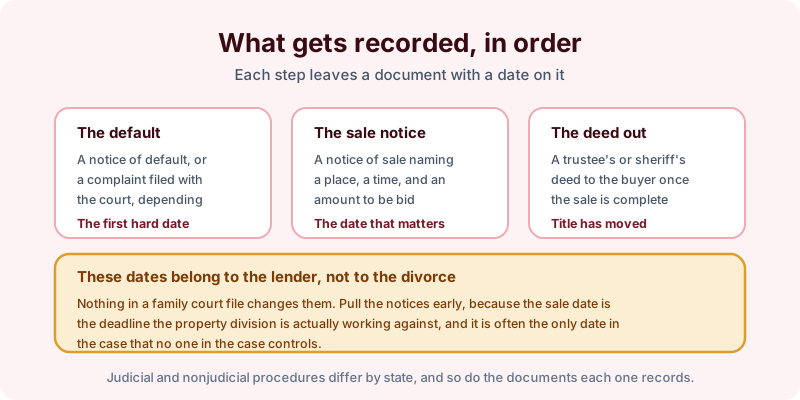
The sequence varies by state, but the documents are recognizable. A default is announced either by a recorded notice or by a complaint filed with the court, depending on whether the state uses a nonjudicial or a judicial process. A sale is noticed with a place, a date, and often an opening bid. A deed goes out to whoever buys, and title has moved.
Each step carries a date, and those dates are the reason to search rather than to ask. A spouse who is behind on payments is frequently not the spouse reporting on the status, and “we’re working it out with the bank” and “the sale is posted for the 14th” can be true at the same time.
Two clocks, one house
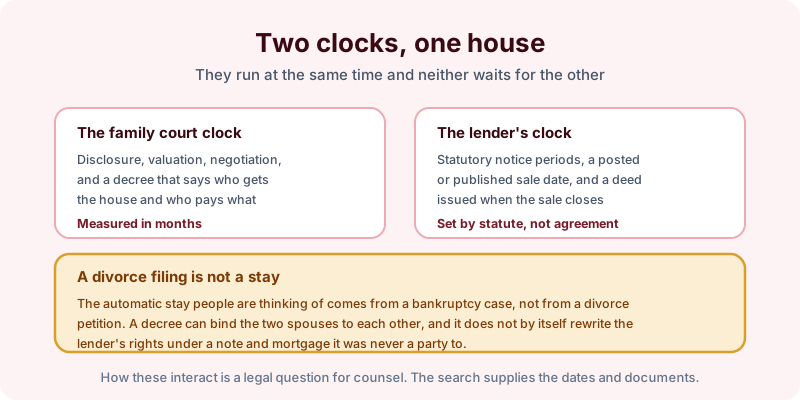
The family court schedule and the statutory foreclosure schedule run at the same time and answer to different rules. A decree can bind the two spouses to each other, ordering one to refinance, to pay arrears, or to list the house. What it cannot do by itself is rewrite the rights of a lender that was never a party to the divorce.
That is why the practical question is usually not who should get the house, but whether there is time to do anything with it. Selling, reinstating, refinancing, and negotiating with the servicer all take weeks that the notice period may or may not provide. Our note on selling the marital home covers the record work a sale needs, and that work does not compress well.
After the sale
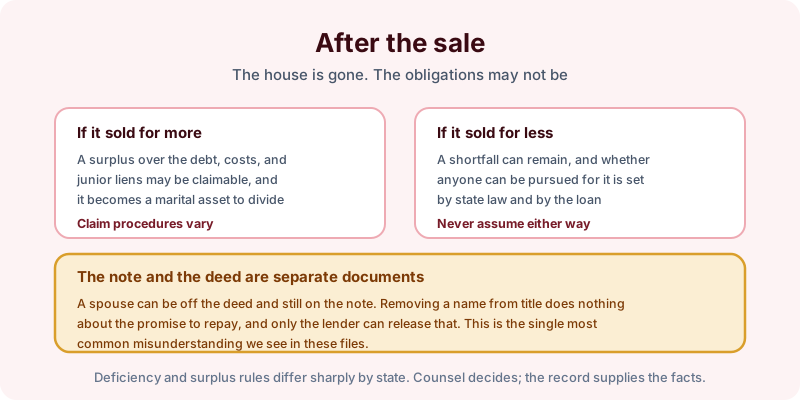
If the property sells for more than the debt, costs, and junior liens, a surplus can exist, and it is a marital asset like any other. Claiming it is a procedure with its own rules and deadlines, and those differ by state, so the amount is worth identifying early rather than discovering later.
If it sells for less, a shortfall can remain. Whether anyone can be pursued for it depends on state law and on the loan itself, and it is not safe to assume in either direction. What is safe to say is the point in our note on one spouse on the deed and both on the mortgage: the deed and the note are separate documents, and taking a name off title does nothing to the promise to repay. Only the lender can release that.
What the search will and will not settle
The search reports the recorded instruments found for the parcels and names given, as of its date, with copies: the mortgage or deed of trust, any assignments, the notices, junior liens, tax status, and any deed issued after a sale. That is the factual spine of the negotiation.
It cannot tell you the current payoff or the arrears figure, which come from the servicer. It cannot tell you whether a reinstatement was accepted, whether a loss mitigation application is pending, or whether the sale will be postponed, because none of that is recorded. Recording and indexing practice varies by county, and a very recent filing may not be indexed when the search runs, so an empty result reflects the record rather than proving no action has started. Whether a decree, a stay, or a deficiency statute changes the outcome is a legal conclusion for counsel.
The takeaway
If a default is even suspected, search the parcel before the next hearing and ask for the notices themselves rather than a summary, because the sale date sets every other deadline in the file. Our process page explains what happens at intake. Start the order online, or send us the names and addresses and we will tell you what a search of that scope would and would not cover before anything is ordered.