

· AFX Research
Using the Property Record to Find a Spouse Who Has Vanished
When a spouse cannot be located, county name indexes are one of the few public trails worth following. What a records search can surface, and what it plainly cannot.
Table of Contents
A divorce cannot move forward until the other side is served, and sometimes the other side has simply gone. No forwarding address, a disconnected number, family who will not say. Property records are one of the few systematic public trails left, because they are organized by name rather than by property, and because recording something is a deliberate act that leaves a dated document behind. This is the same machinery used for finding undisclosed real estate in a divorce, pointed at a person instead of an asset.
Why a name index is the useful part
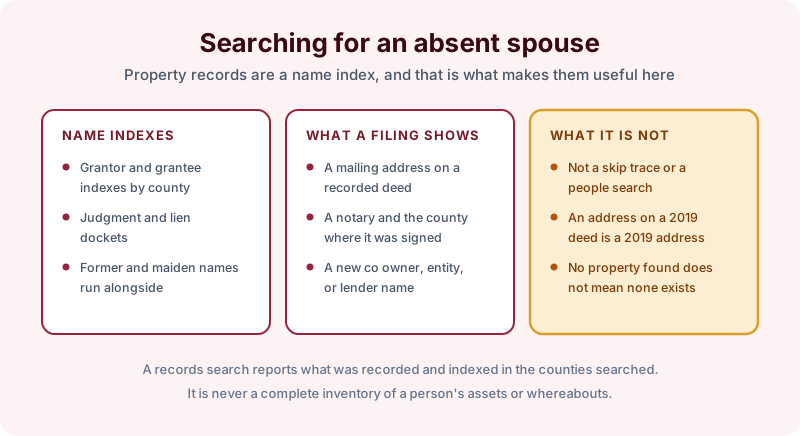
County land records are indexed by grantor and grantee, which means they can be searched by person. Judgment and lien dockets work the same way. Run a name through those indexes across the right counties and anything recorded under it surfaces, along with former and maiden names run alongside.
What an individual filing carries is often more useful than the fact of the filing. A recorded deed frequently shows a mailing address for tax notices. The notary block shows the county where the document was signed, which is a physical location on a specific date. A new co-owner, an entity, or a lender gives you a party who may know more.
None of this is a skip trace. An address on a 2019 deed is a 2019 address, and finding no property does not mean no property exists. It means nothing was found in the indexes read over the term searched, which is a narrower statement and the only one the record supports.
Widening the search without wasting it
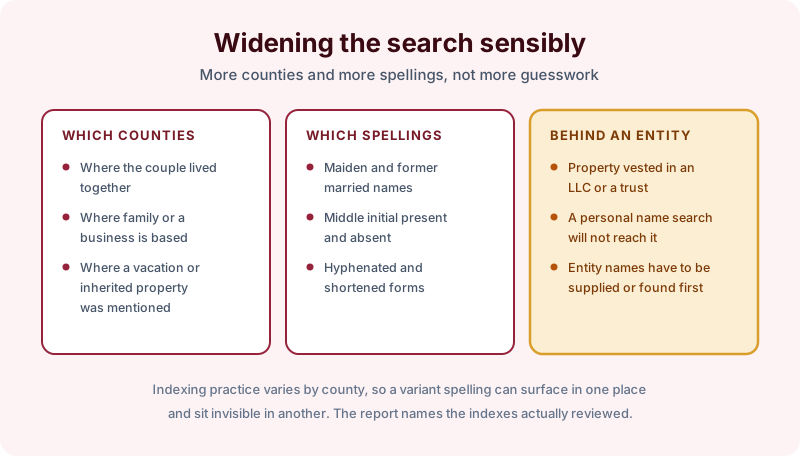
Choosing counties is most of the skill. Where the couple lived together is the obvious start. Where family lives, where a business operated, and any vacation or inherited property either of them ever mentioned are the ones that actually pay off, because a person who has left tends to go somewhere they already had a connection.
Name variations matter more here than almost anywhere. Maiden names, former married names, the middle initial present and absent, hyphenated and shortened forms. Indexing practice varies by county, so a variant that surfaces in one office sits invisible a page away in the next, and giving us every spelling you have is worth more than adding another county.
The gap that catches people is the entity. Property vested in an LLC or a trust does not appear under a personal name at all, and no amount of careful spelling will reach it. If you have any entity name from a tax return, a bank statement, or a prior filing, send it, because that is the only way it gets searched. The same problem is covered in property held in an LLC or trust.
What to do with what comes back
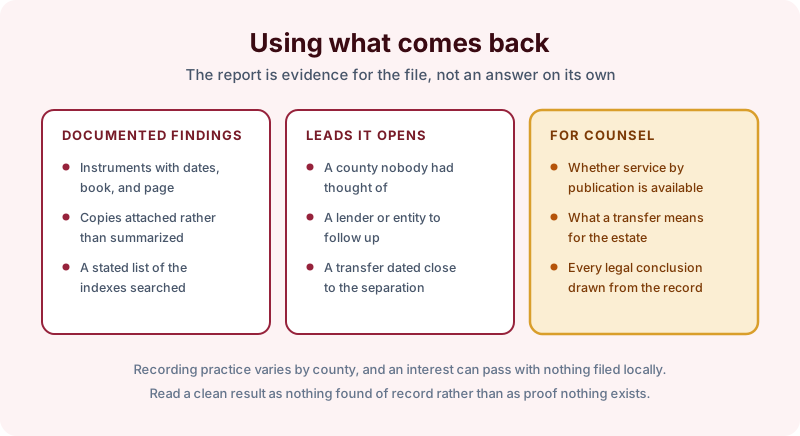
You get instruments with dates, book and page, copies attached rather than paraphrased, and a stated list of the indexes searched. That last item is what makes the report usable as evidence, because it shows the boundary of the effort as well as the result.
The findings usually open leads rather than close the question, and one of them is worth watching for specifically. A deed recorded in the weeks around a separation, moving property to a relative or into an entity, is a fact with a date on it, and it tends to matter more than the address it carries. A county nobody had thought of, a lender or entity worth following up, a transfer dated suspiciously close to the separation. Whether service by publication is available, what a transfer means for the marital estate, and every other legal conclusion drawn from the record belong to counsel, not to the abstractor.
The takeaway
Property records are searchable by name, and that makes them one of the better public trails when someone has gone quiet. Give us every spelling and every county with a real connection, include any entity name you have, and read the result as what was found of record rather than as a complete account of where somebody is. Start the order online, or send us the names and the counties and we will tell you what a search of that scope would and would not cover before anything is ordered.