

· AFX Research
Construction Loans and an Unfinished Home in a Divorce Title Search
What the county record shows while a house is still being built, why mechanics lien timing works against you here, and the questions a settlement on an active job has to answer.
Table of Contents
A half-built house is one of the harder assets to divide, and the county record is only part of the reason. The deed and the construction loan are on file, the draw schedule and the unpaid invoices are not, and the lien deadlines that matter most have not run yet. If you are working from a records search alone — the way you reasonably might on a finished home — you are seeing maybe half of it. The other half looks a lot like the gap described in mechanics liens on the marital home, except stretched across a job that is still going.
What the record shows on an active build
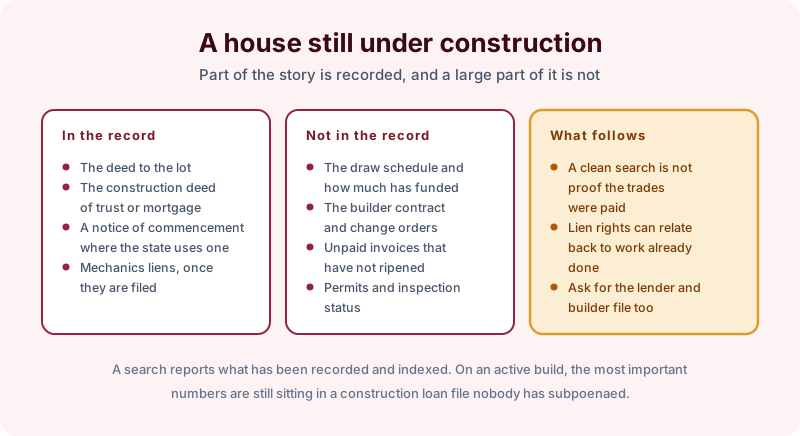
A search will find the deed conveying the lot, the construction mortgage or deed of trust, and in states that use one, a notice of commencement filed at the start of the job. It will find any mechanics lien that has actually been recorded, along with the usual judgments and tax liens indexed against either spouse.
What it cannot find is most of the money. How much of the construction loan has funded, what the draw schedule looks like, what the builder contract says, and which change orders have been signed all live in a lender file and a builder file. So do the invoices that have not been paid and have not yet become liens.
That is a real limit and it is worth stating to a client in plain terms. A search that comes back clean on an active build is not evidence the trades have been paid. It is evidence that nobody has filed yet, which on a construction site is a much weaker statement than it sounds.
Why lien timing works differently here
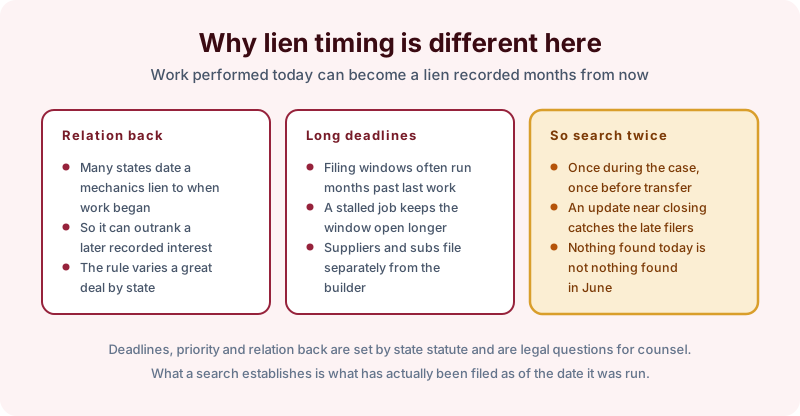
Two features of mechanics lien law make an unfinished house unlike a finished one. The first is relation back. In many states a recorded mechanics lien takes its priority from the date work began or materials were first furnished, not the date it was filed, so a lien recorded in August can outrank an interest recorded in May. How far that reaches, and against whom, varies considerably from state to state.
The second is the length of the deadlines. Filing windows commonly run for months after the last work on the site, and each subcontractor and supplier has its own clock rather than sharing the general contractor’s. A job that stalls — which is common when the owners separate — can leave those windows open far longer than anyone expects.
The practical consequence is that one search is not enough. Run it during the case so the settlement is built on real numbers, and run an update close to whatever transfer the decree calls for. Nothing found in March genuinely tells you nothing about June.
Dividing something that is not finished
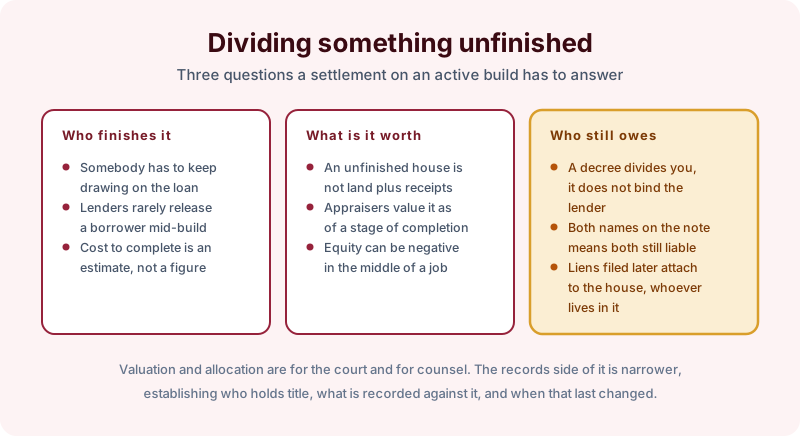
Three questions tend to decide these. Who finishes the house, given that somebody has to keep drawing on the loan and lenders rarely release a borrower in the middle of a build. What it is worth, which is not the lot plus the receipts — appraisers value an incomplete structure at a stage of completion, and equity is frequently negative partway through a job. And who remains on the hook, which is where people get hurt.
That last one is the familiar trap in a new setting. A decree allocates responsibility between the spouses; it does not rewrite the note, and the lender is not a party to it. If both names are on the construction loan, both are still liable after the decree, exactly as in assuming the mortgage instead of refinancing. Liens filed later attach to the house regardless of which spouse is living in it or was supposed to be managing the job.
Where the settlement contemplates one spouse completing the build and buying the other out, the timing of the records work matters. A search before the buyout establishes the baseline, and securing the buyout against the property is worth considering precisely because construction liens can arrive after everyone has signed.
The takeaway
Treat an unfinished house as a moving target rather than an asset with a number attached. Get the recorded picture, get the lender and builder file alongside it, and expect the lien position to keep changing until the deadlines have run. Recording and indexing practice varies by county, and priority and deadlines are questions for counsel rather than for the abstractor. Start the order online, or send us the names and addresses and we will tell you what a search of that scope would and would not cover before anything is ordered.