

· AFX Research
How Co-op Apartment Shares Show Up in a Divorce Title Search
Why a cooperative apartment is usually not real property, which records do and do not name the shareholder, and how to scope a search when the marital home is a co-op.
Table of Contents
You ask for a title search on the marital residence, give us the address of the building, and the report comes back describing a corporation you have never heard of. Nothing has gone wrong. In a housing cooperative the corporation owns the building, and what your client owns is shares in that corporation plus a lease on one apartment. That structure changes almost everything about how the asset appears in the public record, and it is a different problem from the one in property in an LLC or trust, where a deed still exists somewhere.
Shares and a lease, not a deed
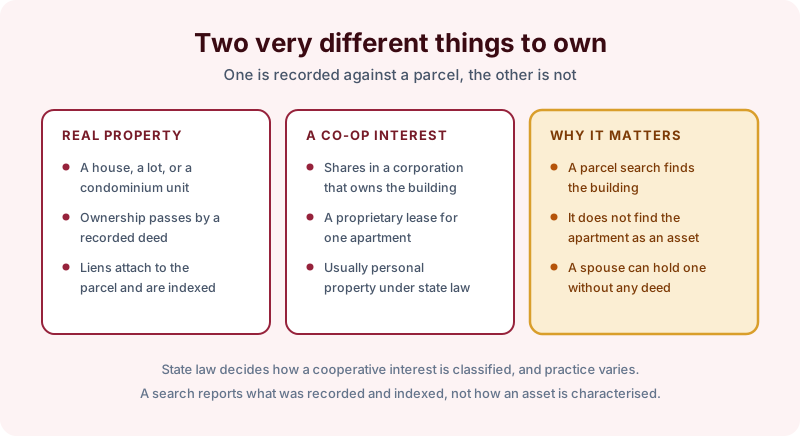
With a house or a condominium unit, ownership moves by a deed that is recorded against a parcel and indexed under the owner’s name. Search that name in that county and the property surfaces.
With a co-op, the shareholder holds a share certificate and a proprietary lease. In most states that combination is treated as personal property rather than real property, so there is no deed to record and no parcel indexed in your client’s name. A spouse can hold a very valuable apartment while a name search of the land records returns nothing at all about it.
That is not a gap in the search. It is a description of where the asset actually lives.
A few places do it differently. Some cooperatives, particularly older ones and certain limited equity forms, were set up so that the apartment interest is treated as real property and is recorded. Whether the one in front of you works that way is a question of state law and of how that specific corporation was organized, so it is worth confirming rather than assuming from the building type.
Three records, three custodians
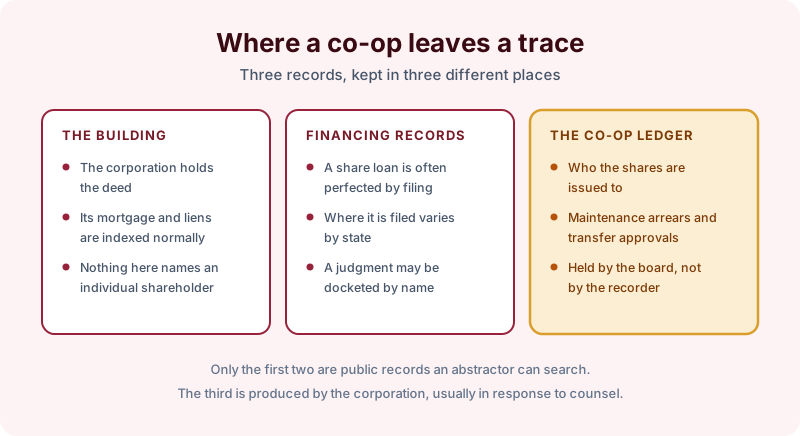
The building. The cooperative corporation holds title, and its own mortgage, often called an underlying mortgage, together with any liens against the corporation, are recorded and indexed the ordinary way. This tells you about the building’s finances, which matters, but it names no individual shareholder.
Financing filings. A loan secured by co-op shares is typically perfected by a financing statement rather than a mortgage, and where that gets filed varies by state. A money judgment against a spouse may also be docketed by name in a court index, and a judgment does not care whether the asset it might reach is real or personal property.
The cooperative’s own books. Who the shares are issued to, what maintenance is owed, and whether a transfer has been approved are all recorded by the board, not by the county. Only the corporation can produce that, usually in response to a subpoena or a request from counsel.
Scoping the search so it is useful
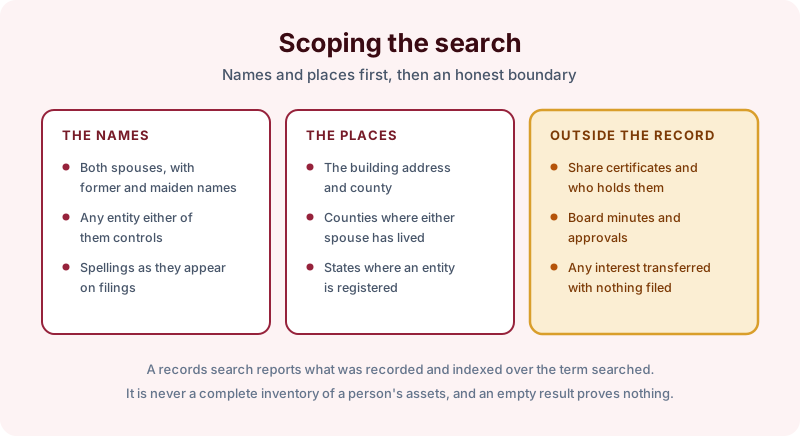
Give us both spouses’ names including former and maiden names, any entity either of them controls, the building address and county, and the other counties where either spouse has lived or done business. We run the names through the land and judicial records available in those places, and we tell you plainly which indexes were searched and over what period.
What comes back is useful in two directions. It can surface other real property neither side disclosed, which is the ordinary work described in finding undisclosed real estate in a divorce. It can also establish, on the record, that the apartment is held in a form the land records do not reach, which is worth knowing before anyone argues about it. Our process page sets out how the scope is confirmed before the work starts.
The takeaway
A co-op apartment is real value held in an unusual wrapper, and a parcel search will not find it under a shareholder’s name. Search the names anyway, because judgments and other property surface there, then go to the corporation for the share and arrears record. Classification and division are legal questions for counsel, not for the abstractor. Start the order online, or send us the names and the building address and we will tell you what a search of that scope would and would not cover before anything is ordered.