

· AFX Research
A Marital Home with a Shared Well or Septic Agreement in a Divorce
Where the equipment sits, whether anything was recorded about it, and why the spouse who keeps the house inherits the repair obligation along with the deed.
Table of Contents
Rural and semi rural homes frequently share water or wastewater with a neighbor, and the arrangement is easy to miss because nothing about it is visible from the driveway. In a divorce it becomes a real term, because one party is usually keeping the house, and with it a long term obligation that may cost more than the appliances everyone is arguing about. The structure resembles easements and access on divided marital property, with the added wrinkle that the shared thing can fail.
Start with where the equipment sits
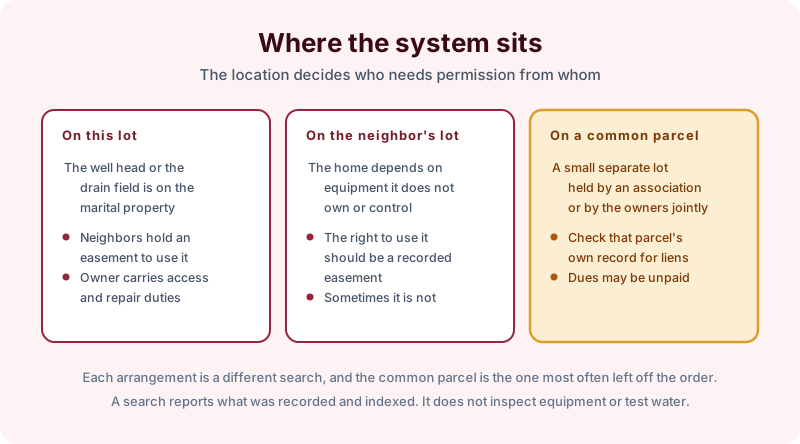
There are three common arrangements and they are not interchangeable.
The well head or the drain field may sit on the marital lot, with the neighbors holding a right to use it. The owner of record carries the access obligation and often the maintenance duty, and the burden shows in the record as an easement running against the property.
It may sit on the neighbor’s lot, which is the more exposed position. The home depends on equipment it neither owns nor controls, and the right to keep using it ought to be a recorded easement. Sometimes it is.
Or it may sit on a separate common parcel held by a small association or by the owners jointly. That parcel has its own record, its own tax bill and sometimes its own liens, and it is the piece most often left off an order because nobody thinks of it as property. Ask the assessor for the parcel number of the lot the equipment stands on, not only the one the house stands on.
What was actually recorded, if anything
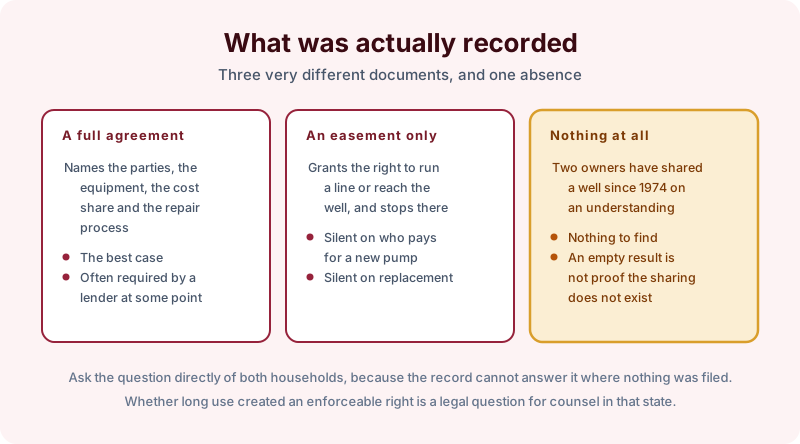
A full shared well or septic agreement names the parties, identifies the equipment, sets the cost share and describes what happens when something breaks. Lenders on federally backed loans have required documents of this kind for decades, so one often exists if the home was financed in the last thirty years.
An easement alone is a weaker document that gets mistaken for the first one. It grants the right to run a line or reach the well head and then stops. It is usually silent about who pays for a new pump, and entirely silent about replacement.
And frequently there is nothing recorded at all. Two households have shared a well since 1974 because it made sense in 1974. A records search cannot find an instrument that was never filed, and an empty result is not evidence the sharing does not exist. Whether decades of use created an enforceable right is a legal question for counsel in that state, not something the record settles.
What it means once the settlement is signed
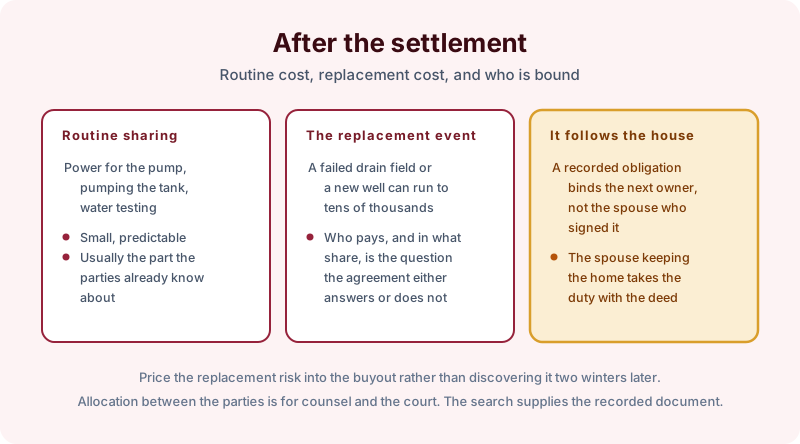
Routine cost is small and predictable. Power for the pump, pumping the tank, periodic testing. The number that matters is the replacement event, because a failed drain field or a new well runs into five figures, and whether the agreement allocates that cost is the single most useful thing to know before the buyout number is fixed.
A recorded obligation binds the property, not the person. The spouse keeping the home takes the duty with the deed, and the spouse leaving generally does not shed an obligation they signed personally simply because they moved out. How that is allocated between the parties is for counsel and the court. What we contribute is the recorded document itself, attached to the report, so the discussion starts from the text. Our products page sets out the search terms available.
The takeaway
Search the marital lot, and search the common parcel too if one exists, and ask both households directly what is shared and what was ever put in writing. The pattern is similar to a marital home on leased land, where the record covers only part of the arrangement. Start the order online, or send us the addresses and the county and we will tell you what a search of that scope would and would not cover before anything is ordered.