

· AFX Research
A Home Equity Investment Agreement on the Marital Home, What to Check
Cash was taken against a share of future value. The lien is recorded, the amount owed depends on an appraisal nobody has done, and a quitclaim may trigger it.
Table of Contents
Four years ago the couple took $90,000 from a home equity investment company against a share of the future value of the house. There have been no payments and no statements, so neither of them has thought about it since. The search shows a recorded deed of trust in favor of a company nobody at the table recognizes, and the amount owed cannot be stated by anyone until somebody appraises the property. The equity figure the settlement has been built around is not a number, it is a range. This is a close relative of a mortgage in forbearance, with the uncertainty on the other side.
What an equity investment is
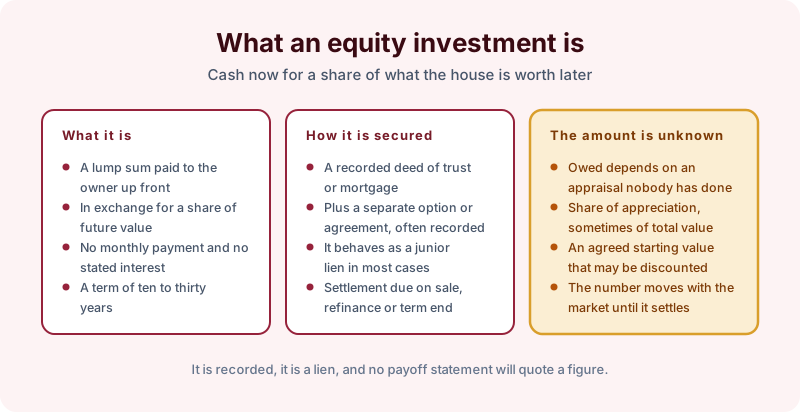
The product pays a lump sum up front in exchange for a share of the property’s future value, with no monthly payment and no stated interest rate, over a term of ten to thirty years.
It is secured by a recorded deed of trust or mortgage, usually alongside a separate option or agreement which may also be recorded. In most structures it behaves as a junior lien, and settlement falls due on a sale, a refinance, or the end of the term.
The amount owed is unknown until somebody fixes it. It depends on an appraisal that has not happened, on a share of appreciation or in some products of total value, and on an agreed starting value that may have been discounted below market at the outset. The figure moves with the market right up to the day it settles.
What it does to a settlement
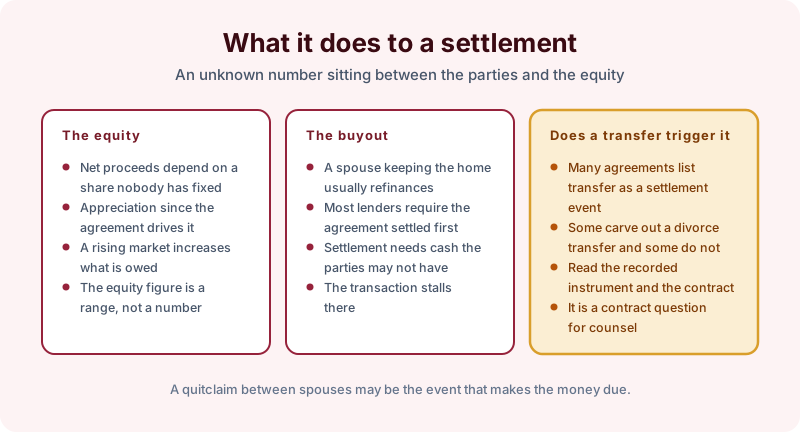
The equity calculation stops producing a single number. Net proceeds depend on a share nobody has fixed, appreciation since the agreement drives it, and a rising market increases what is owed rather than what the parties keep.
The buyout stalls in a familiar place. A spouse keeping the home normally refinances, most lenders require the agreement settled first, and settlement needs cash the parties may not have. That is the same obstacle as in a PACE assessment on the home.
And there is a question that has to be asked rather than assumed. Many of these agreements list a transfer of the property as a settlement event. Some carve out a transfer between spouses incident to divorce and some do not. A quitclaim deed that everyone treats as routine may be the act that makes the money immediately due, and the answer is in the contract rather than in the recorded instrument.
Why this is harder than a second mortgage
Because a second mortgage has a balance. Somebody can call the servicer and get a figure that is correct as of a date.
Here the provider can supply the formula and an estimate, and the actual settlement depends on a valuation performed at the time. Two reasonable appraisals can differ by eight percent on an ordinary house, and the share is calculated on the difference between a starting value and that number. Where the agreement used a discounted starting value, the share of apparent appreciation is larger than the market actually delivered.
A records search reports what was recorded and indexed over the term searched. It establishes that the lien exists and what instruments govern it. It does not and cannot produce a payoff figure.
Scoping the search
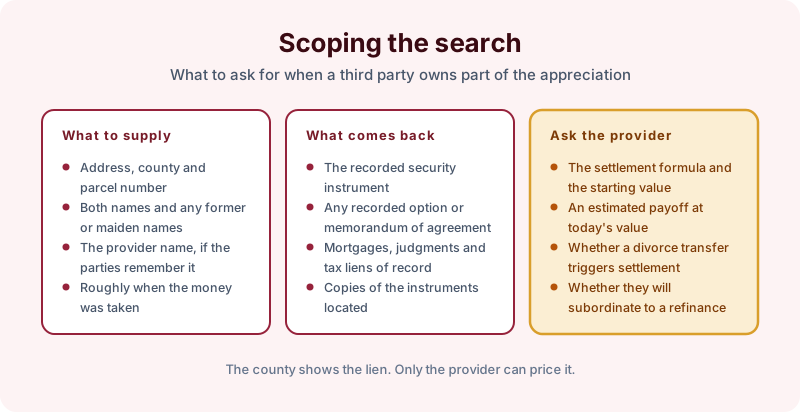
Supply the address, county and parcel number, both names with any former or maiden names, the provider name if the parties remember it, and roughly when the money was taken. What comes back is the recorded security instrument, any recorded option or memorandum, the mortgages, judgments and tax liens of record, and copies of the instruments located. Our process page sets out how that is done.
Ask the provider for the settlement formula and the starting value, an estimated payoff at today’s value, whether a divorce transfer triggers settlement, and whether they will subordinate to a refinance.
The takeaway
The lien is recorded and the number is not, which makes this an unusually awkward asset to divide. Get the recorded instruments and the contract in front of counsel before anybody signs a quitclaim, because the quitclaim itself may be the trigger. Start the order online, or send us the address and the names and we will tell you what a search of that scope would and would not cover before anything is ordered.