

· AFX Research
A Marital Home in an Age Restricted Community, What to Check
The restriction limits who may live in the house, not who may own it. Why that gap matters in a buyout, and what the recorded declaration actually controls.
Table of Contents
A couple in their sixties divorces and the marital home is in a fifty-five-plus community. One spouse is sixty-one and the other is fifty-two, and the settlement assumes the younger spouse takes the house. That may be perfectly possible or entirely impossible, and the answer is in a declaration recorded against the land long before either of them arrived. Age restricted communities limit occupancy, not ownership, and the divorce is one of the few events that reliably pulls those two apart. The mechanism is a stricter cousin of the one in HOA liens and assessments in a divorce.
What the age restriction does
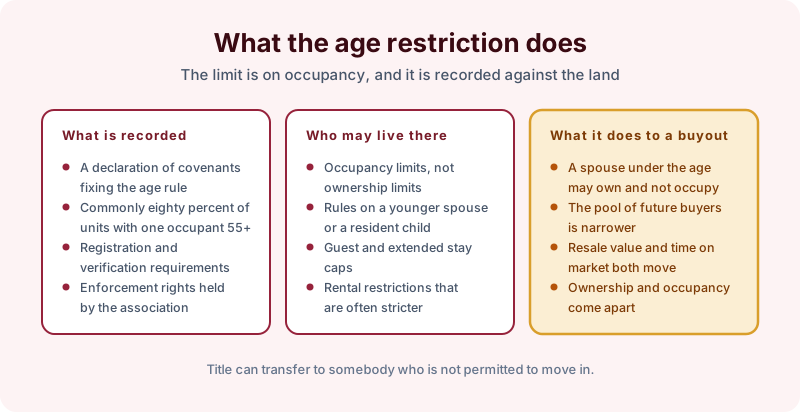
What is recorded is a declaration of covenants fixing the age rule, usually structured so that at least eighty percent of occupied units have one resident aged fifty-five or over, with registration and verification requirements and enforcement rights held by the association.
What it controls is who may live there. A younger spouse, a resident adult child, a grandchild moving in after a family crisis — each is governed by the declaration rather than by anybody’s preference. Guest and extended stay caps are common, and rental restrictions are frequently stricter than the occupancy rules themselves.
The consequence for a buyout is that ownership and occupancy can come apart. A spouse below the threshold may be able to take title and be unable to move in. Even where the community’s percentage allowance leaves room, the pool of future buyers is narrower than in an unrestricted neighborhood, which affects both resale value and time on market. Neither of those is a title defect. Both are facts a settlement should be built on rather than around.
Where the rules are kept
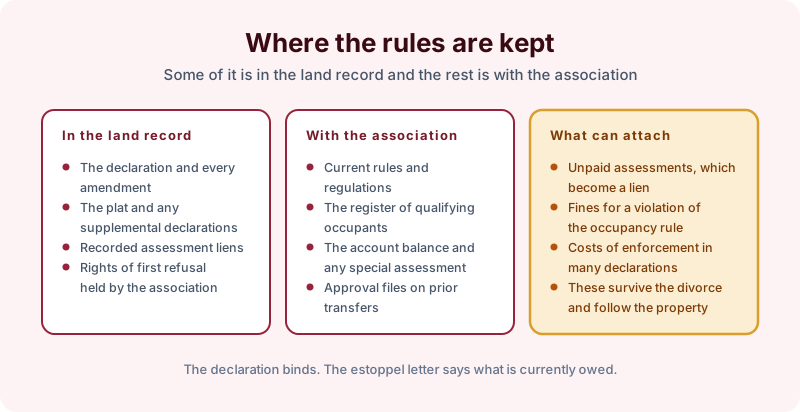
The land record holds the declaration and every amendment, the plat, any supplemental declarations, recorded assessment liens, and any right of first refusal the association holds. That is the binding framework and a search reaches all of it.
The association holds the operating layer — the current rules, the register of qualifying occupants, the account balance, any special assessment, and the approval files from prior transfers. None of that is recorded, and the estoppel or resale certificate is how you get it.
What can attach to the property is worth taking seriously. Unpaid assessments become a lien in most states. Fines for a violation of the occupancy rule can accrue, and many declarations shift enforcement costs to the owner. These survive the divorce and follow the property to whoever ends up with it.
The trap in the settlement language
A decree that awards “the marital residence” to one spouse says nothing about whether that spouse may live in it. Where the younger spouse takes title and cannot occupy, the practical outcomes are a rental the declaration may forbid, a sale nobody planned for, or a violation that generates fines. That is a version of the mismatch described in the divorce decree versus the deed, arriving through the covenants rather than the conveyance.
Recording and enforcement practice varies a great deal between communities, and some associations administer the percentage allowance flexibly while others do not. Never assume a neighbor’s experience transfers. The declaration is the document, its interpretation belongs to counsel, and the association’s current position belongs to the association.
Scoping the search
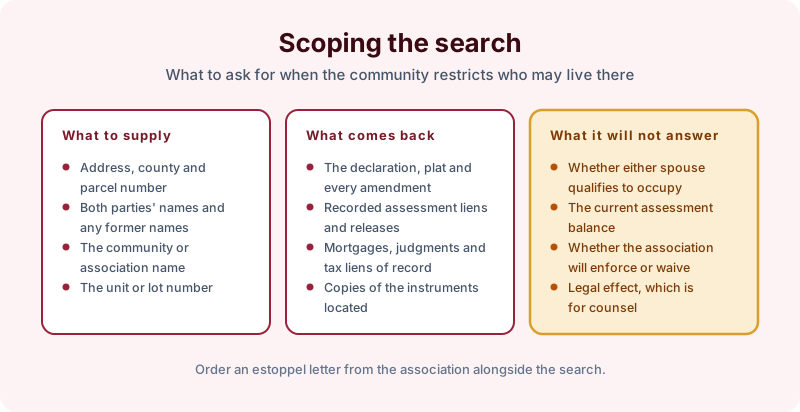
Give us the address, county and parcel number, both parties’ names including former names, the community or association name, and the unit or lot number. What comes back is the declaration, plat and amendments, recorded assessment liens and releases, and the mortgages, judgments and tax liens found of record, with copies of the instruments.
What it will not answer is whether either spouse qualifies to occupy, what is currently owed, or whether the association intends to enforce or waive. An empty result is not proof that nothing exists — it means nothing was found of record in the county searched over the term searched. See our products for the available scopes.
The takeaway
In an age restricted community the recorded declaration decides who can live in the marital home, and it does not care what the decree says. Read it before the buyout is agreed rather than after, and pair the search with an estoppel letter so the money and the eligibility are both known. Start the order online, or send us the address and the community name and we will tell you what a search of that scope would and would not cover before anything is ordered.