

· AFX Research
A Damaged or Condemned Marital Home in a Divorce Title Search
Fire, flood or a demolition order changes what the house is, what it is worth, and who controls the money. What reaches the land record, and when it arrives.
Table of Contents
A house burns, floods, or takes enough storm damage that the city posts it. The divorce was already underway. Now the single largest asset in the case is a structure nobody can live in, an insurance claim nobody controls alone, and a lien position that will keep changing for months after the repairs finish. Almost none of that is visible on the day of the loss, and a good deal of it eventually lands in the county record. This sits alongside a foreclosure running during the case in the sense that the property itself has become unstable, not just the marriage.
What damage leaves behind
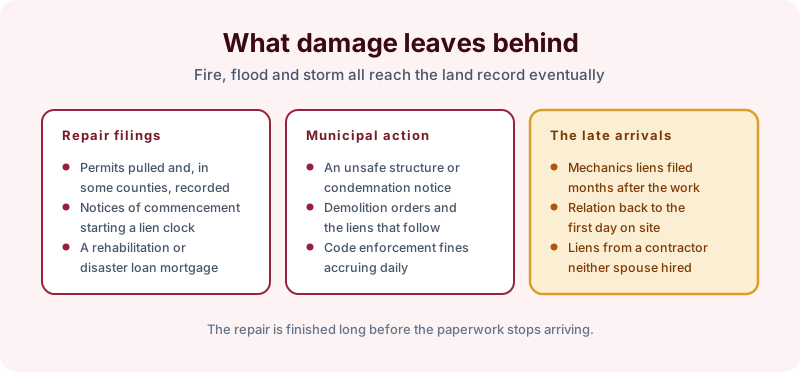
Repair work generates paper. Permits, which in some counties are recorded and in most are not. A notice of commencement, where state law uses one, which starts a lien clock running. A rehabilitation loan or disaster loan, which is a new mortgage against the property and a new claim on the equity being divided.
Municipal action generates more. An unsafe structure notice, a condemnation, a demolition order, and the assessment or lien that follows demolition if the owner does not act. Code enforcement fines can accrue daily and attach to the parcel rather than to the person.
The late arrivals are the ones that break settlements. A mechanics lien can be recorded months after the work was finished, and in most states it relates back to the first day of work on the site. A search run the week the repairs end can be entirely accurate and still miss liens that will attach to that same period, which is the timing problem described in mechanics liens on the marital home.
Who holds the money
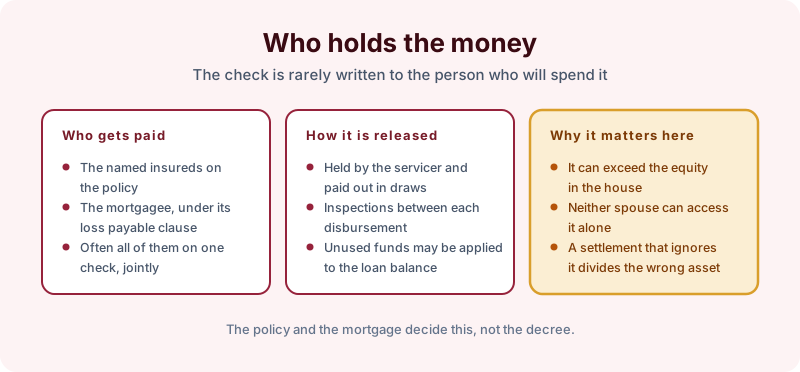
Insurance proceeds are often the largest contested asset, and neither spouse usually controls them. The insurer pays the named insureds and the mortgagee under its loss payable clause, frequently on a single check payable jointly to all of them.
The servicer then holds the funds and releases them in draws against inspections, and if the loan is in default or the house is not rebuilt, unused proceeds may be applied to the balance instead. The policy and the mortgage decide this. A decree that assigns “the insurance money” to one spouse without addressing the mortgagee’s rights has divided something the parties do not control.
Why the valuation question is genuinely open
A damaged property has at least three plausible values — pre-loss, as-is, and repaired — and the difference between them can exceed the equity. A records search does not value anything, so the appraisal question stays separate from the title question, but the title search feeds it, because the liens and the new mortgage debt found of record come straight off the number.
Recording and indexing practice varies by county, and municipal liens in particular are handled very differently from place to place. Some file with the recorder, some sit on a separate municipal roll, and some become enforceable without a recorded instrument at all. Never assume a clean search means there is no municipal exposure. Our process page explains what a search of a given scope reaches.
Scoping the search
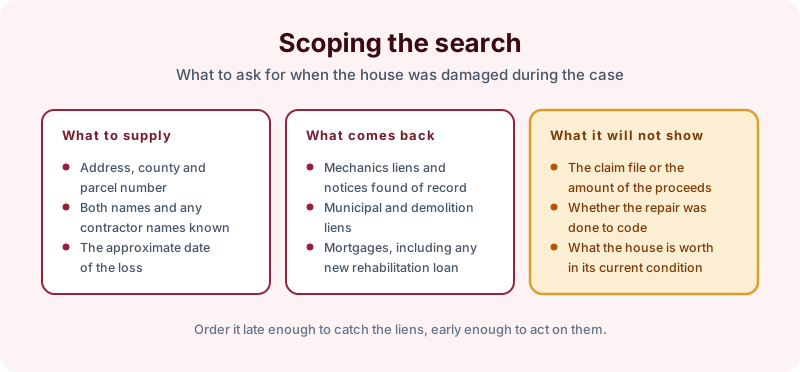
Give us the address, county and parcel number, both parties’ names, any contractor names you have, and the approximate date of loss so the term covers the whole repair period. What comes back is the mechanics liens and notices found of record, municipal and demolition liens, and every mortgage including any new rehabilitation borrowing.
What it will not show is the claim file, the proceeds figure, whether the work met code, or what the house is worth now. Those belong to the insurer, the building department and an appraiser. And an empty result is not proof that nothing exists — it means nothing was found of record over the term searched.
The takeaway
Damage turns one asset into three moving parts — the structure, the claim, and a lien picture that keeps arriving late. Timing the search matters more here than almost anywhere else in a divorce, because the liens that decide the outcome may not be filed yet. Start the order online, or send us the address and the date of loss and we will tell you what a search of that scope would and would not cover before anything is ordered.