

· AFX Research
Unreleased Old Mortgages on the Marital Home, What to Do
A loan paid off in 2003 can still sit on the record as a live lien. Why the release never got filed, how it surfaces in a divorce, and the routes to clearing it.
Table of Contents
The mortgage was paid off when the house was refinanced in 2003. Everybody remembers it, the payments stopped, the statements stopped, and nobody thought about it again for twenty-two years. Then a buyout requires clear title and the search shows that mortgage still open on the county index, because payment and release are two separate events and only the first one happens automatically. This is a very common defect and it is almost always fixable, provided somebody starts on it before the closing date rather than at it.
Why a paid loan lingers
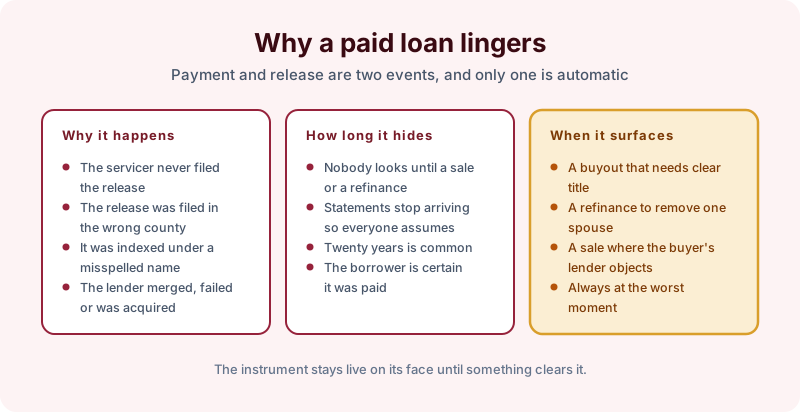
The reasons are mundane. The servicer never filed the release. It was filed in the wrong county, which happens on parcels near a line. It was indexed under a misspelled name and is therefore invisible to a search. Or the lender merged, failed or was acquired somewhere in the interval, and the release fell through a gap in somebody’s conversion.
It hides for decades because nobody looks. There is no notice, no statement, no annual reminder, and the borrower is entirely certain the debt was paid — which it was. The lien is a recorded instrument, and a recorded instrument stays live on its face until something clears it. That is the same durability described in judgment liens recorded after the decree, from the opposite direction.
It surfaces at the worst possible moment every time. A buyout that needs clear title. A refinance to remove one spouse from the loan. A sale where the buyer’s lender declines to close over it. Never during discovery, when there would be time.
How it gets cleared
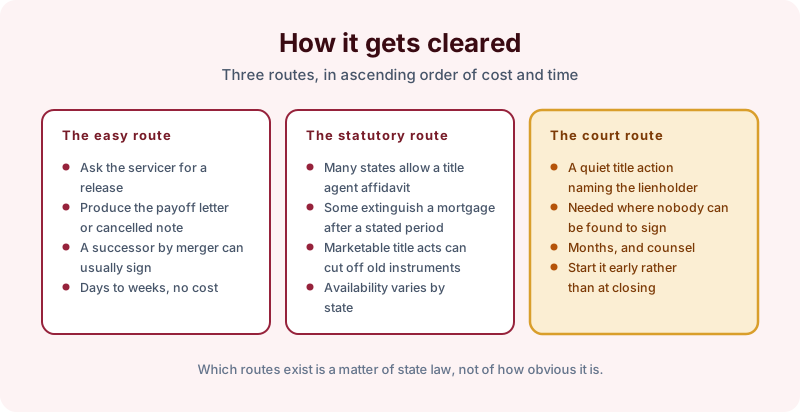
Three routes, in ascending order of cost and time.
Ask. Contact the servicer, produce the payoff letter or the cancelled note, and request a release. Where the original lender was acquired, the successor by merger can usually sign. This costs nothing and takes days to weeks, and it resolves most cases.
Use the statute. Many states allow a title agent or attorney to record an affidavit of satisfaction on proof of payment. Some extinguish a mortgage by operation of law after a stated period past maturity. Marketable title acts can cut off old instruments entirely. Which of these exists is a matter of state law and none of them should be assumed.
Go to court. A quiet title action naming the lienholder, needed where nobody can be found to sign. That is months and counsel, and it is the reason to start early — the analysis is the one in quiet title actions after a divorce.
Why this matters more in a divorce than in a sale
In a sale the parties share an interest in clearing the defect, and the closing simply moves. In a divorce the parties frequently do not share an interest in anything, and an unreleased lien becomes leverage rather than a task.
There is also a valuation effect. A house that cannot be conveyed or refinanced until an old lien is cleared is worth less, today, than the same house with a clean chain, and a settlement that assigns the property at an unencumbered value has mispriced it. Whoever takes the house inherits the cleanup along with it.
Scoping the search
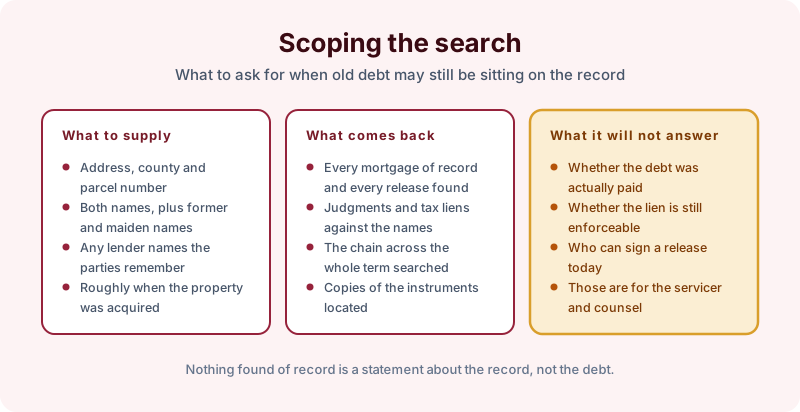
Give us the address, county and parcel number, both names with any former and maiden names, any lender names the parties remember, and roughly when the property was acquired. What comes back is every mortgage of record with every release found, the judgments and tax liens against the names searched, the chain across the whole term, and copies of the instruments located. Our process page sets out how that work is done.
What it will not answer is whether the debt was in fact paid, whether the lien remains enforceable, or who can sign a release today. Those are for the servicer and for counsel, and nothing found of record is a statement about the record rather than about the debt.
The takeaway
An old mortgage sitting unreleased is one of the most common and most fixable defects in a divorce file, and the only thing that reliably goes wrong is timing. Run the search early enough that the easy route is still available. Start the order online, or send us the address and the names and we will tell you what a search of that scope would and would not cover before anything is ordered.