

· AFX Research
Title Insurance After a Divorce Transfer, and What Lapses
Why an owner policy usually does not follow the spouse who keeps the house, what a search establishes that a policy does not, and when to check each one.
Table of Contents
The house is awarded to one spouse, a deed is signed, and both parties assume the title insurance bought at purchase is still protecting the person living there. Frequently it is not. An owner’s policy insures a named insured, and a conveyance is the moment that assumption quietly stops being safe.
This is worth raising during the settlement rather than after it, because the cheapest time to deal with it is while both parties are still at the table.
What a policy actually does
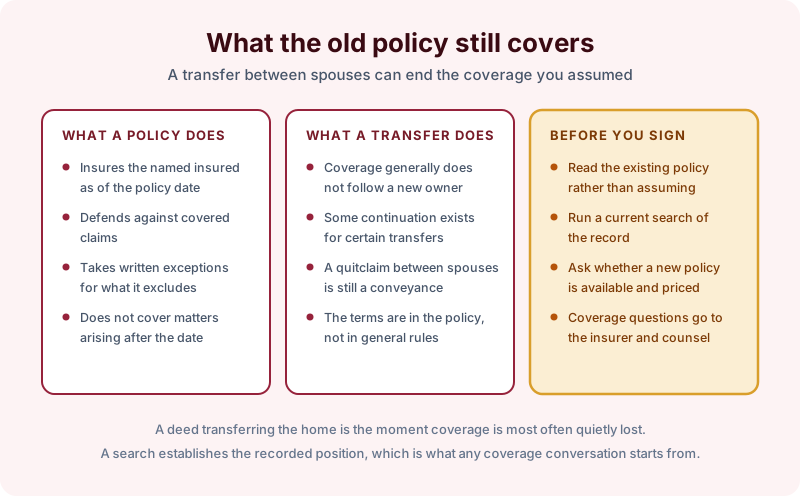
An owner’s policy insures the named insured against certain defects existing as of the policy date, defends covered claims, and takes written exceptions for everything it will not cover. It does not cover matters arising afterwards, which means a lien recorded during the marriage, long after the purchase, was never within its scope to begin with.
That last point matters more than people expect in a divorce, because the encumbrances that actually complicate a settlement are usually recent ones. A judgment docketed three years ago is not a defect the original policy was ever addressing, and it is exactly the sort of thing a quitclaim deed between spouses does nothing to remove.
Why a transfer can end it
Coverage generally runs to the named insured and does not automatically follow a new owner. Some policies provide limited continuation for certain transfers, and the terms vary by policy form and by insurer. A quitclaim between spouses is still a conveyance, and a spouse who was not named on the original policy may not have been insured even before the transfer.
None of that is a general rule you can apply from a distance. It is written in the policy, and the policy is a document somebody has to read. Whether coverage continues, and on what terms, is a question for the insurer and for counsel rather than for an abstractor. What can be established from the outside is the recorded position, which is what any coverage conversation has to start from.
Search and policy answer different questions
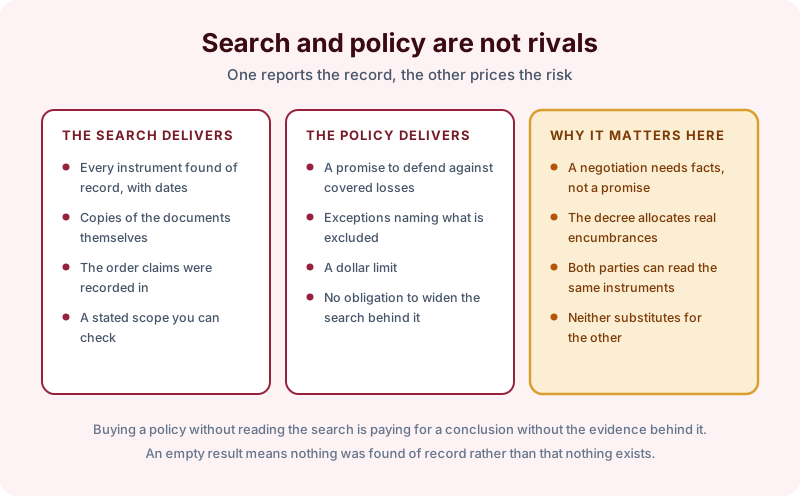
A search reports every instrument found of record with its date, supplies copies of the documents, establishes the order claims were recorded in, and states its own scope so you can check it. A policy promises to defend against covered losses up to a limit, subject to its exceptions, and carries no obligation to widen whatever search sat behind it.
For a settlement negotiation the search is the useful artifact. Both parties can read the same instruments, the decree can allocate specific encumbrances rather than gesturing at them, and nobody is relying on a conclusion they cannot inspect. That distinction runs through liens against marital property generally.
Neither substitutes for the other, and buying a policy without reading the search underneath it is paying for a conclusion without the evidence. The exceptions schedule is worth particular attention, since it names the things the insurer has specifically declined to cover, and those are frequently the items a settlement most needs to allocate.
Check twice, around the deed
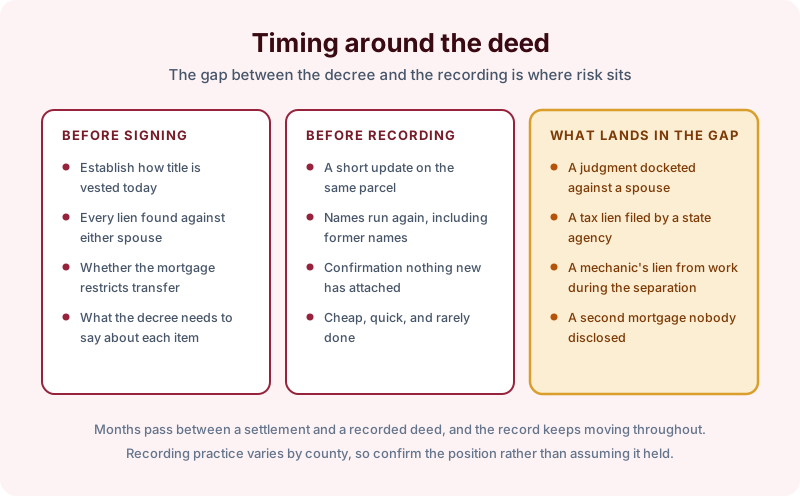
Run a search before the settlement is signed, establishing how title is vested and what is recorded against either spouse. Then run a short update before the deed is recorded.
That second one is cheap, quick, and rarely done, and it is the one that catches a judgment docketed during the negotiation, a state tax lien, a mechanic’s lien from work done during the separation, or a second mortgage nobody disclosed. Months routinely pass between a settlement and a recorded deed, and the record keeps moving the whole time, which is the subject of judgment liens recorded after the decree.
The takeaway
Do not assume the old policy transferred, read it rather than guessing, and get a current search in front of both parties before anything is signed. A search reports what was found of record in the offices searched, which is narrower than everything that exists, and recording practice varies by county. Start the order online, or send us the names and addresses and we will tell you what a search of that scope would and would not cover before anything is ordered.