

· AFX Research
What Property Tax Records Show in a Divorce, and What They Do Not
Which county office holds which record, the leads a tax bill and an exemption claim can give you, why the tax roll is not a title record, and how to use both together.
Table of Contents
The county tax office is a different building from the recorder of deeds, and it answers a different question. It exists to bill somebody for a parcel, not to establish who owns it. That distinction gets lost constantly in divorce work, because the tax record is usually free, usually online, and frequently searchable by name — everything the land record often is not.
Used carefully it is genuinely useful. Used carelessly it produces confident statements about ownership that the underlying deeds do not support.
Two tax offices, and neither one is the recorder
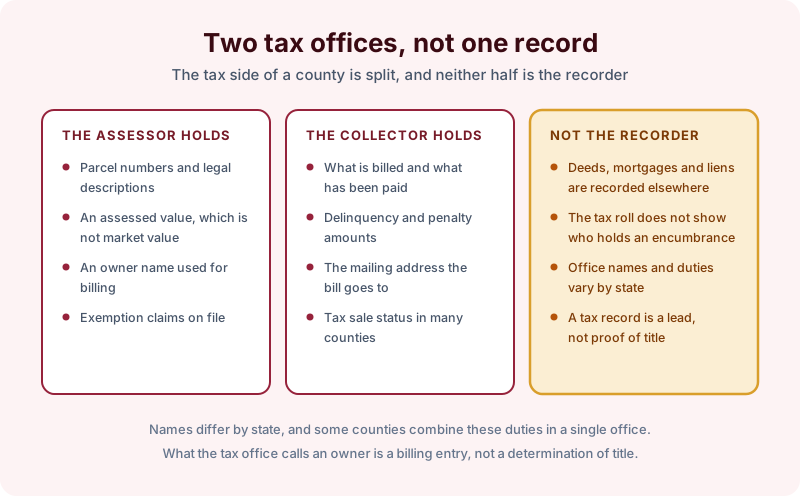
Most counties split the work. An assessor, appraisal district, or auditor maintains the tax roll — parcel numbers, legal descriptions, an assessed value, an owner name used for billing, and any exemptions claimed. A treasurer or collector handles the money, tracking what was billed, what was paid, and where the bill was mailed. Titles vary, and in some counties one office does both.
Neither office is where deeds, mortgages, and liens are recorded. When somebody says they checked the property records, it is worth asking which office, because the answer usually turns out to be the tax roll.
What the tax record can actually hand you
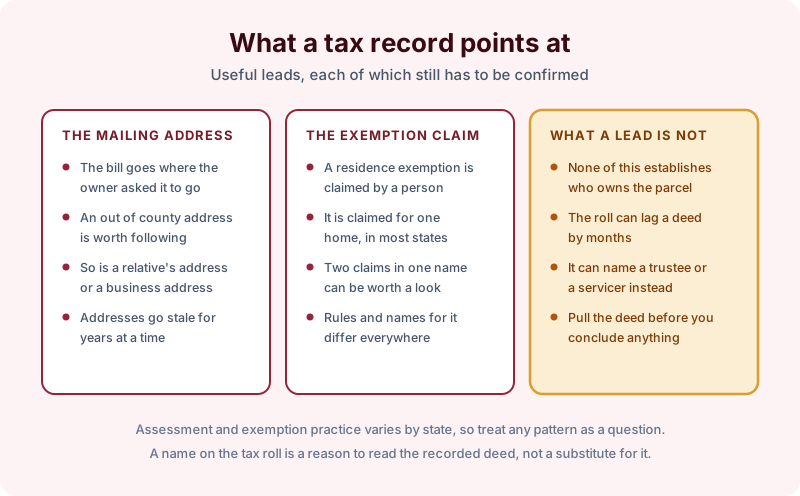
The mailing address on the bill is the first thing worth pulling. A tax notice goes wherever the owner asked it to go, and that is often not the parcel. A bill for land in one county routed to an address in another is a lead worth following, and so is one going to a relative or a business nobody has mentioned. This is one of the quieter ways undisclosed real estate surfaces.
The exemption claim is the other. A homestead or primary residence exemption is generally claimed by a person, for one home, on a dated application. Where two properties in different counties carry one in the same name, something is worth explaining, though exemption rules differ enormously by state.
Why the name on the tax bill is not the owner
The owner field on a tax roll is a billing entry. It can lag a recorded deed by weeks or months, because the assessor updates on its own cycle, and it can name a trustee, a loan servicer, a contract purchaser, or a person who died years ago whose estate nobody opened.
A name there is a reason to pull the recorded deed and read it. It is not a finding about title, and it does not belong in a settlement schedule on its own.
Delinquency and value, two separate cautions
Unpaid property taxes matter for reasons that have little to do with the amount. In most places the tax obligation sits ahead of nearly every other lien on the parcel, and left unpaid long enough it can end in a tax sale. Procedures and redemption periods vary sharply by state, but the exposure does not care which spouse the decree told to pay. Tax liens on marital property are a separate question again.
Assessed value is the other trap. It is set for a taxing formula, on its own schedule, and in some states capped by statute. It is not an appraisal, and treating it as a settlement number is how people argue about the wrong figure.
Pairing the tax record with the land record
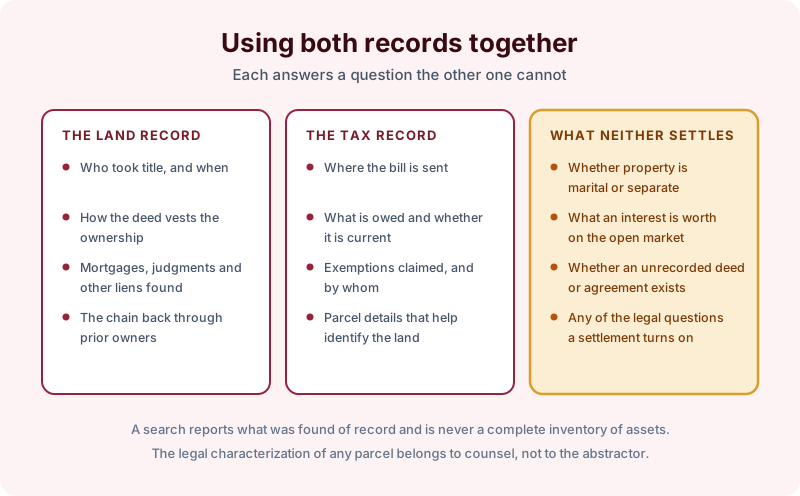
Run them together and each covers the other’s blind spot. The land record establishes who took title and when, how the deed vests that ownership, and what mortgages, judgments, and other encumbrances were found against the parcel and the names. The tax record fills in where the bill goes and what is owed.
The way we scope a search starts from names and counties rather than a parcel number, because the tax roll is organized the other way around. If you are unsure which records a question needs, what each search covers is the place to start.
Neither record decides whether a parcel is marital or separate property, what an interest is worth, or whether an unrecorded deed exists somewhere. Those stay questions for counsel.
The takeaway
Treat the tax record as a source of leads and a picture of what is owed, and treat the recorded deeds as the record of who holds title. The tax roll will point you at a county nobody mentioned and tell you the marital home is two years behind. It will not tell you who owns anything, and an empty result proves nothing about what exists elsewhere.
Start the order online, or send us the names and addresses and we will tell you what a search of that scope would and would not cover before anything is ordered.