

· AFX Research
Medicaid Estate Recovery Liens on the Marital Home in a Divorce
When one spouse is receiving long term care benefits, the state may have a claim on the house. What a title search can show about it, and what only an elder law attorney can answer.
Table of Contents
Later life divorces bring a complication that shorter marriages rarely do. One spouse is in a nursing home or receiving long term care at home, the benefits paying for it come through a state Medicaid program, and the marital home is the largest thing left to divide. States are entitled to recover what they spent, and the house is frequently where they look. Before anyone agrees who keeps it, somebody needs to read the parcel record, in much the same way a settlement turns on tax liens on marital property.
Two different claims that get called the same thing
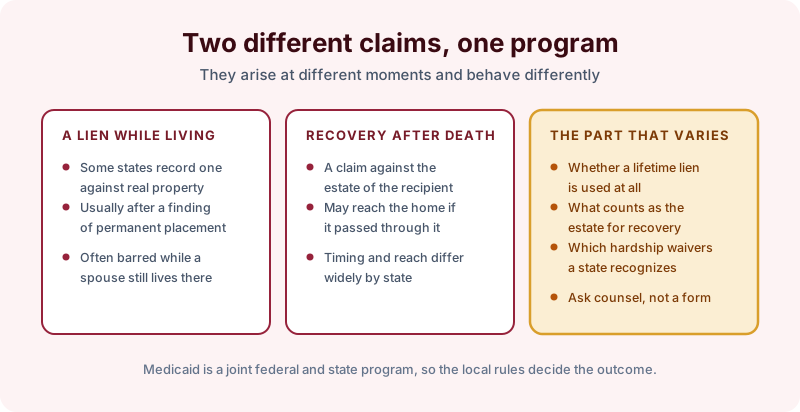
The first is a lien recorded while the recipient is still alive. Some states place one against real property after determining that the person is not reasonably expected to return home. Protections commonly apply when a spouse, a minor child, or a disabled child still lives in the house, which is exactly the situation a divorce is about to change.
The second is estate recovery after death, a claim made against the estate of the person who received benefits. Whether it reaches the home depends on how the home passes and on how broadly the state defines an estate for this purpose.
The variation between states is the whole story here. Whether a lifetime lien is used at all, what counts as the recoverable estate, which hardship waivers exist, and how each of those interacts with a divorce decree are state law questions. Nothing in a records search decides them, and a general rule read online is a poor substitute for advice from counsel who practices in that state.
Where it shows up in a search
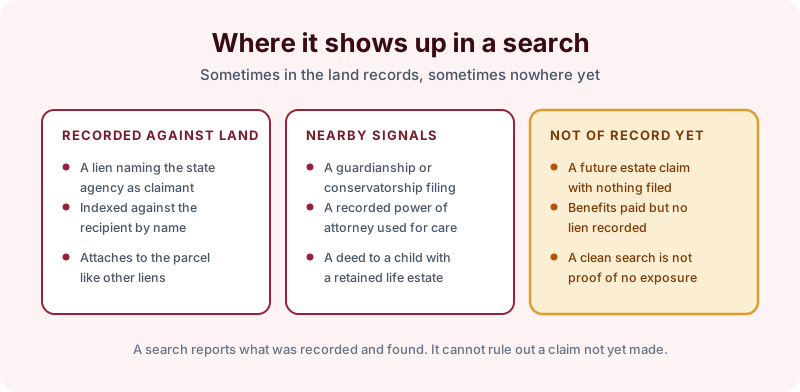
When a lien has been recorded, it appears the way other liens do — an instrument naming a state agency as claimant, indexed against the recipient’s name, attaching to the parcel. A search of the property and the names will surface it and attach a copy.
The record often carries adjacent signals as well. A guardianship or conservatorship proceeding, a recorded power of attorney being used to manage the person’s affairs, or a deed conveying the house to an adult child while reserving a life estate all point toward care planning that someone should ask about. That last one overlaps with life estates and remainder interests in a divorce, and it changes what either spouse can actually convey.
What a search cannot do is rule out future exposure. Benefits may have been paid with nothing filed against the land, and an estate claim that arises on death has no reason to exist in today’s index. Our abstractors report what was recorded and found over the term searched, and recording practice varies by county, so an empty result is not a finding that no claim exists.
What transferring the house changes
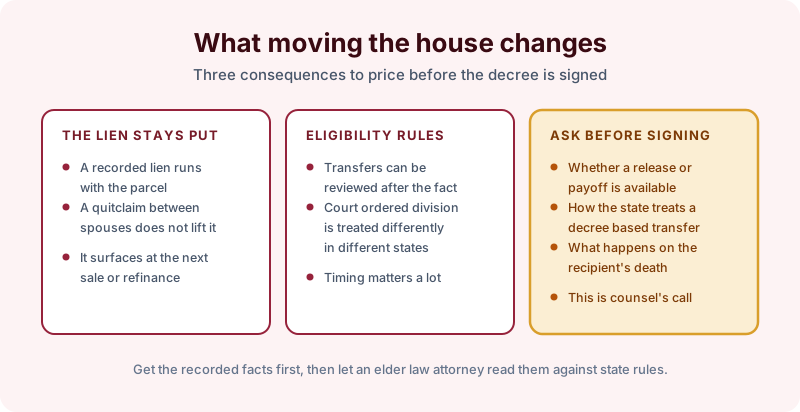
A recorded lien runs with the parcel. A quitclaim from one spouse to the other under a settlement does not lift it, and the ordinary way people discover this is at the next sale or refinance, when the closing cannot proceed until the claim is addressed.
Transfers also get looked at after the fact. Programs review property that changed hands during a lookback window, and how a division ordered by a court is treated is not uniform from state to state. That is a reason to raise the question before the decree is drafted rather than after it is entered, and to bring in an elder law attorney alongside family counsel.
The practical sequence is simple enough. Pull the recorded facts first, including the deeds, any lien, and any life estate or transfer already made. Then let counsel read those facts against the state’s rules and tell you what a release, a payoff, or a differently worded decree would cost. Our process is built to produce that first layer quickly, with copies attached.
The takeaway
When long term care benefits are in the picture, the marital home carries a claim that may or may not be on file yet. Get the parcel and name searches done before the property is allocated, read the recorded instruments rather than assuming, and put the eligibility and recovery questions to an attorney who practices in that state. Start the order online, or send us the names and addresses and we will tell you what a search of that scope would and would not cover before anything is ordered.