

· AFX Research
Guardianship and Incapacity in a Divorce Property Search
When a spouse cannot sign for themselves, authority comes from a recorded power of attorney or a court appointment. What the chain shows, and what it can never establish.
Late-life divorce, or a divorce interrupted by a stroke or a dementia diagnosis, brings a question the property record was not designed to answer. Somebody has to sign, and the person whose name is on the deed may no longer be able to. Authority to act for them comes from one of a few sources, some recorded and some not, and deeds signed during a decline in capacity are among the most contested documents in any chain. The search still does useful work here, and it is important to be precise about which part.
Where authority comes from
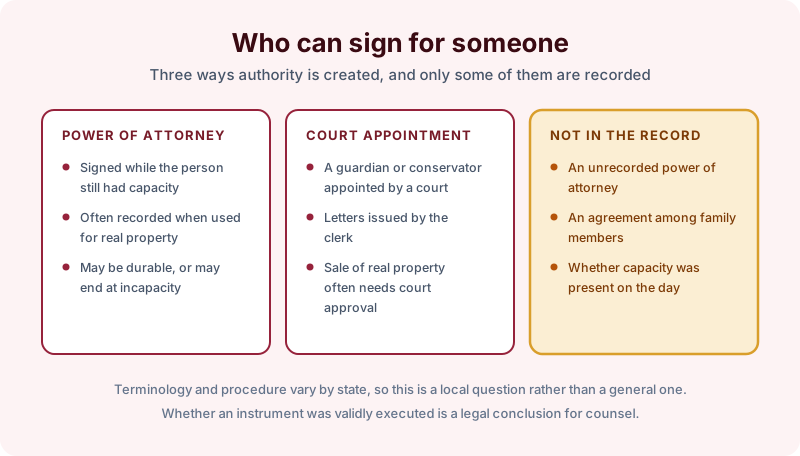
A power of attorney signed while the person still had capacity. Where it is used for real property it is commonly recorded alongside the deed, and whether it survives incapacity depends on whether it was drafted as durable. Our note on quitclaim deeds in a divorce touches the same execution questions from a different angle.
A court appointment. A guardian or conservator appointed by a court, with letters issued by the clerk, and in many states a sale of real property needs specific court approval on top of the appointment. Terminology varies considerably between states, so this is a local question.
And the arrangements that leave no trace. An unrecorded power of attorney, a family agreement about who handles what, and above all whether the signer actually had capacity on the day. None of that is in the county record, and no search will produce it.
What to look for in the chain
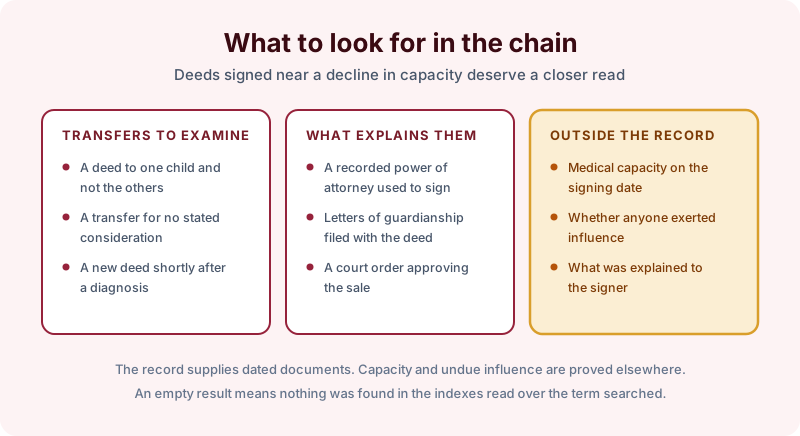
Certain transfers are worth a closer read. A deed to one adult child and not the others, a transfer for no stated consideration, or a new deed recorded shortly after a diagnosis. None of those is evidence of anything on its own, and each is a dated recorded fact that somebody may later need to explain.
Then look for what explains them. A recorded power of attorney used to sign, letters of guardianship filed alongside the deed, or a court order approving the sale. A deed signed by an attorney in fact with no recorded power of attorney behind it is a finding worth flagging.
What stays outside the record is medical capacity on the signing date, whether anyone exerted influence, and what was actually explained to the signer. Those are proved through medical records, testimony, and discovery. The abstractor’s contribution is the dated document, which is where every such argument starts.
The notary block is worth reading in that context. It records where the signing happened and who witnessed it, and a deed acknowledged somewhere unexpected, a hospital or a care facility rather than an office, is a small fact that occasionally matters a great deal later.
Scoping it
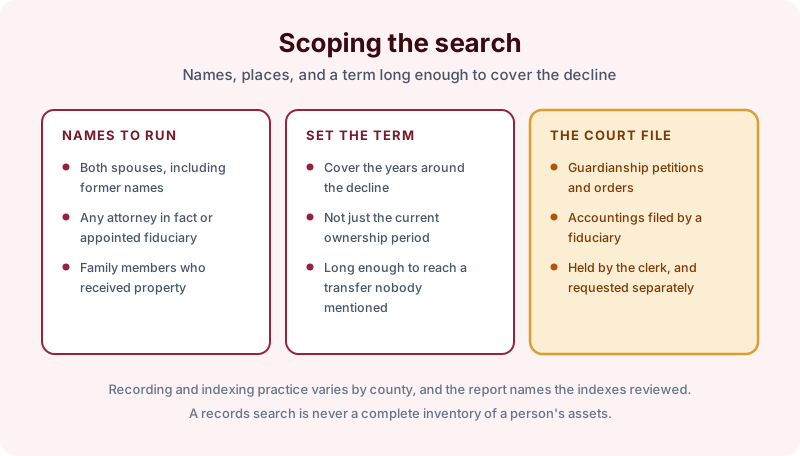
Give us both spouses including former names, any attorney in fact or appointed fiduciary, and family members who may have received property. Set the term to cover the years around the decline rather than just the current ownership period, because the transfer that matters is frequently one nobody has mentioned.
The guardianship petitions, orders, and any accountings a fiduciary filed are held by the court clerk rather than the recorder, so they are a separate request. Recording and indexing practice varies by county, and our report names the indexes actually reviewed so the boundary of the work is visible. A records search reports what has been recorded and is never a complete inventory of a person’s assets, which matters more than usual in a case where somebody may not be able to tell you what they own. The same discipline applies in finding undisclosed real estate in a divorce.
The takeaway
Find out where the authority to sign came from, and check whether the instrument creating it was recorded. Read any transfer made during the decline as a fact with a date rather than as a conclusion. Whether a deed was validly executed, and whether capacity existed, are legal questions for counsel. Start the order online, or send us the names and the counties and we will tell you what a search of that scope would and would not cover before anything is ordered.