

· AFX Research
A Vacant Marital Home During a Contested Divorce Title Search
Nobody lives there and the obligations keep running. Which charges become liens on the parcel, where they show up, and why a clean search is not a clean balance.
Table of Contents
One spouse moved out, then the other did, and the house has been empty since March. Neither party wants to pay for a property they may not keep, the case is moving slowly, and in the meantime the property is quietly accumulating claims against itself. Both spouses still own it, so this is a shared problem regardless of how the rest of the case is going. It compounds the ordinary exposure described in liens against marital property.
An empty house keeps spending
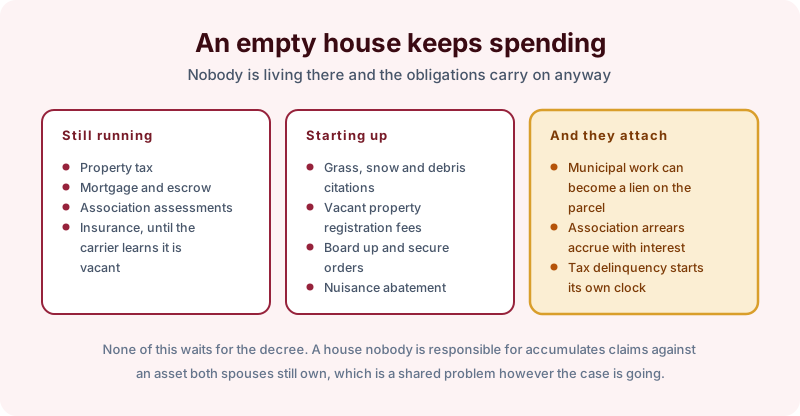
Some obligations simply carry on. Property tax, the mortgage and its escrow, association assessments, and insurance until the carrier discovers the house is vacant and either reprices or cancels the policy. That last one catches people, because a standard homeowner’s policy usually stops covering a property after a stated period of vacancy.
Other problems start precisely because nobody is there. Grass, snow and debris citations. Vacant property registration fees, which a growing number of municipalities charge. Board up and secure orders after a break in. Nuisance abatement where the city sends a crew.
And each of those can become a lien on the parcel. Municipal work performed on the property is commonly recoverable as a lien, association arrears accrue with interest and costs, and tax delinquency starts a clock that eventually runs to a sale. None of it waits for the decree.
Where the charges show up
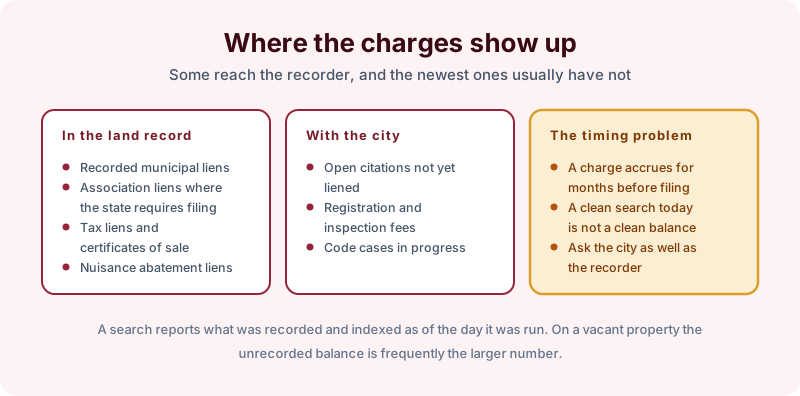
Some of it reaches the land record. Recorded municipal liens, association liens where the state requires them filed, tax liens and certificates of sale, and nuisance abatement liens. A search will find those, and they are what code enforcement liens look like once they are formalized.
A good deal stays with the municipality. Open citations that have not been reduced to a lien, registration and inspection fees, and code cases still in progress.
Worth adding is that a vacant property attracts a different class of problem entirely. Empty houses are the ones targeted for deed fraud, because nobody is there to notice a forged conveyance being recorded against the address. A search run before any transfer catches it, and a search run only at the start of the case does not, which is the scenario set out in deed fraud and forged transfers.
The timing gap is the part that misleads. A charge typically accrues for months before anybody files anything, so a search run today can be genuinely clean while the city is holding a four figure balance. A clean search is not a clean balance, and on a vacant property the unrecorded number is frequently the larger one. Ask the city as well as the recorder.
What to actually do
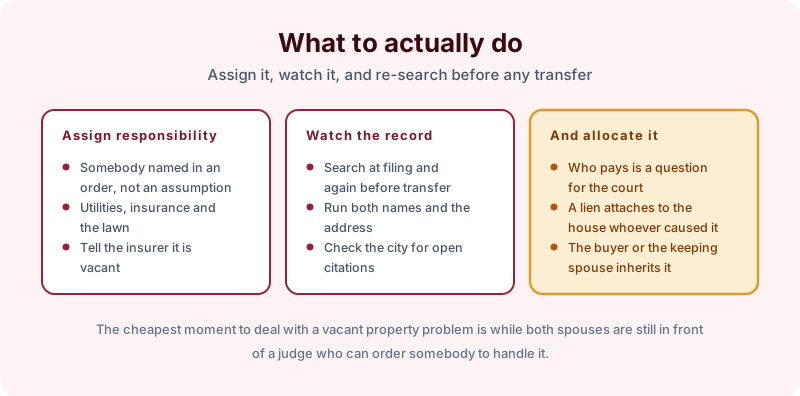
Assign responsibility to a person by name, in an order rather than by assumption. Utilities, insurance, the lawn and the snow. Tell the insurer the house is vacant, because a canceled policy plus a burst pipe is how an equitable distribution argument turns into a much smaller number for both sides.
Watch the record. Search when the case is filed and again immediately before any transfer, run both names and the address, and check the city for open citations at the same time. Anything recorded in the interval is exactly the category described in judgment liens recorded after the decree, arriving earlier.
Then let the court allocate it. Who ultimately pays is a question for the judge and for counsel. A lien attaches to the house whichever spouse caused it, and whoever keeps the property, or whoever buys it, inherits the balance.
The takeaway
A vacant marital home is a depreciating asset with an accruing liability attached, and the cheapest moment to deal with it is while both spouses are still in front of a judge who can order somebody to handle it. Get the recorded picture, get the municipal balance separately, and re-run both before anybody signs a deed. Start the order online, or send us the names and addresses and we will tell you what a search of that scope would and would not cover before anything is ordered.